
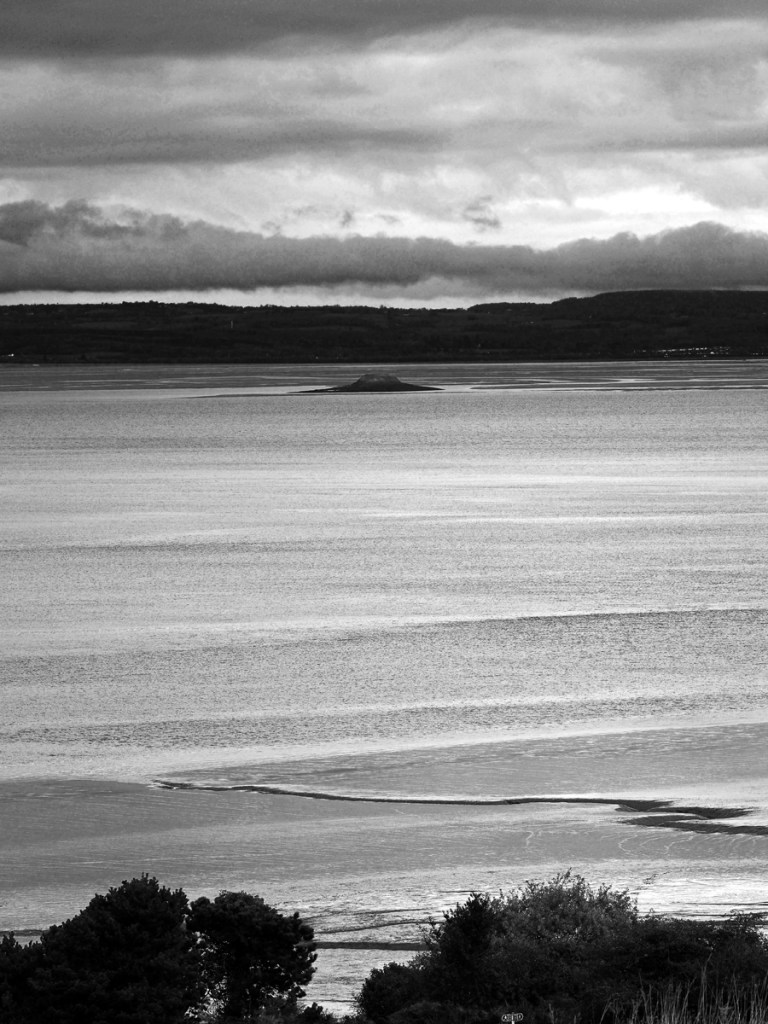
Deny Island in the Bristol Channel, looking towards Wales:
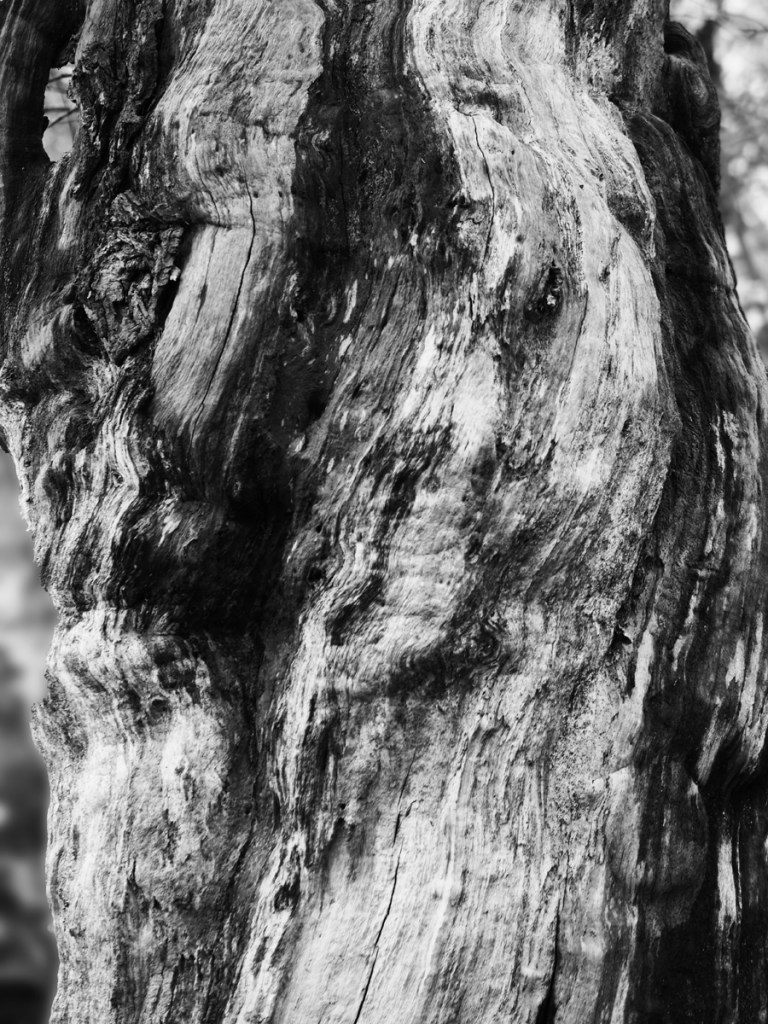
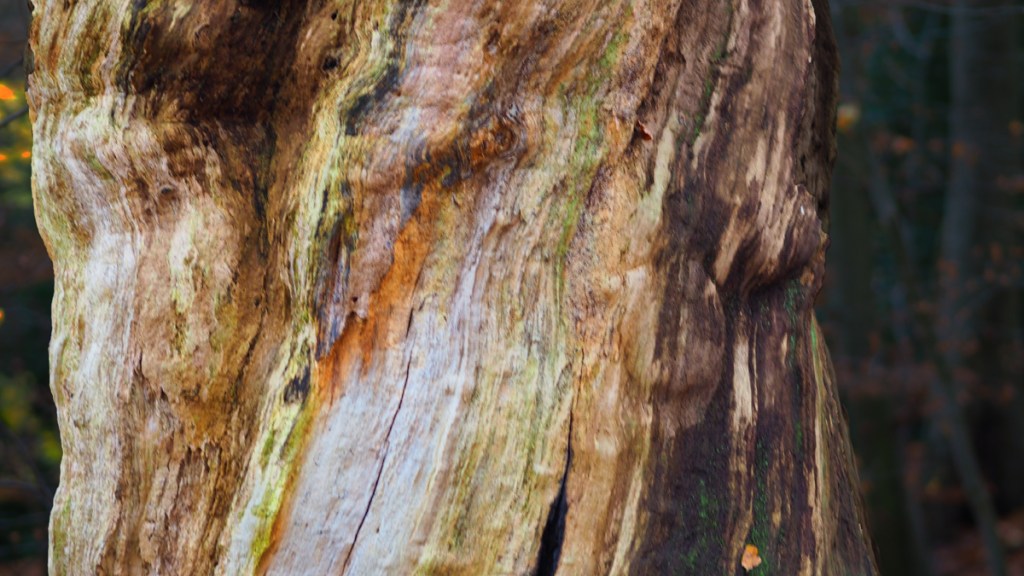
Trees in Ashton Court, Bristol:
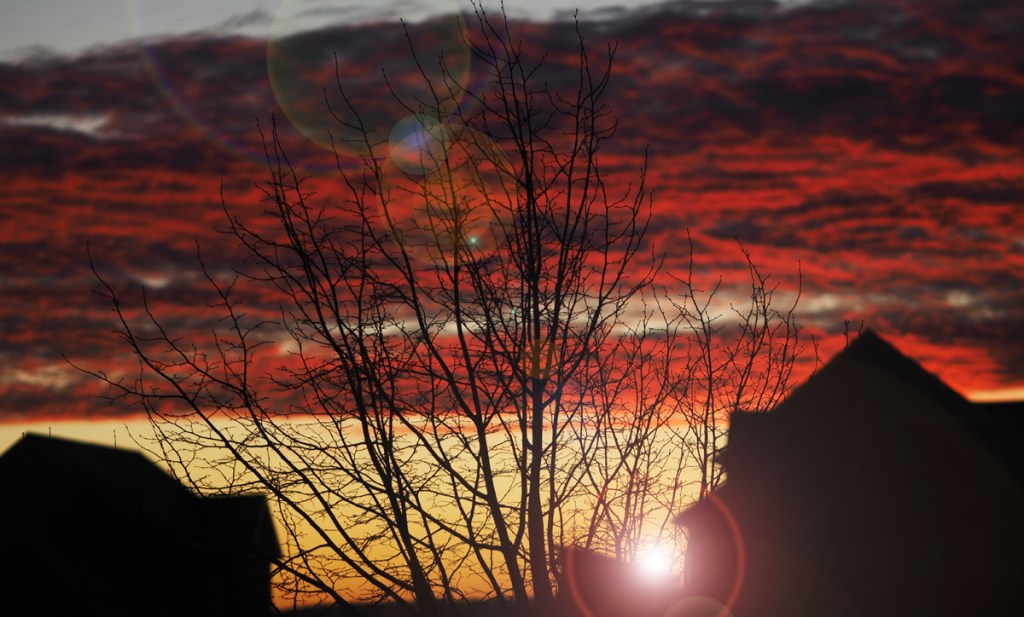
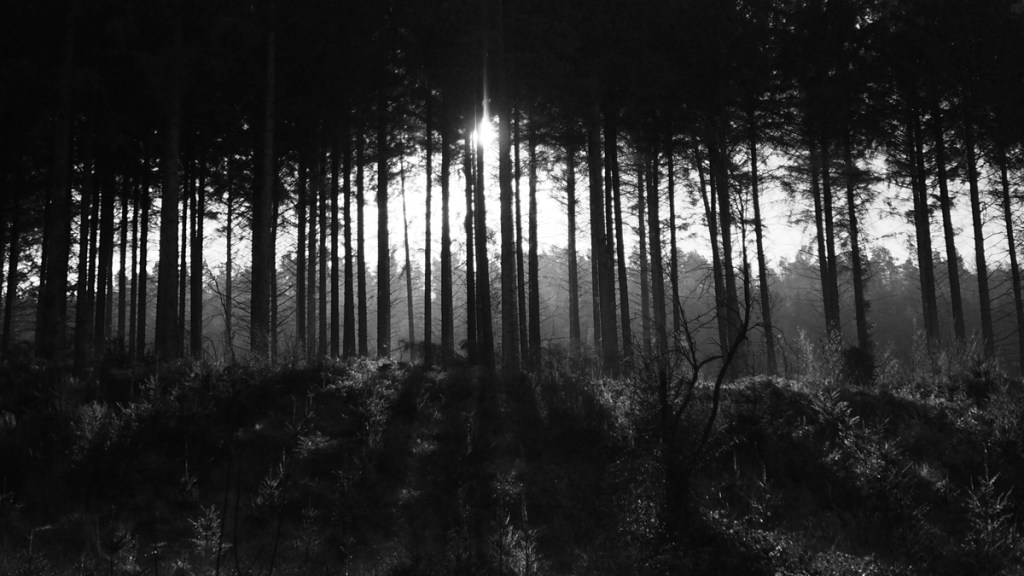
Sunrise over Portishead:
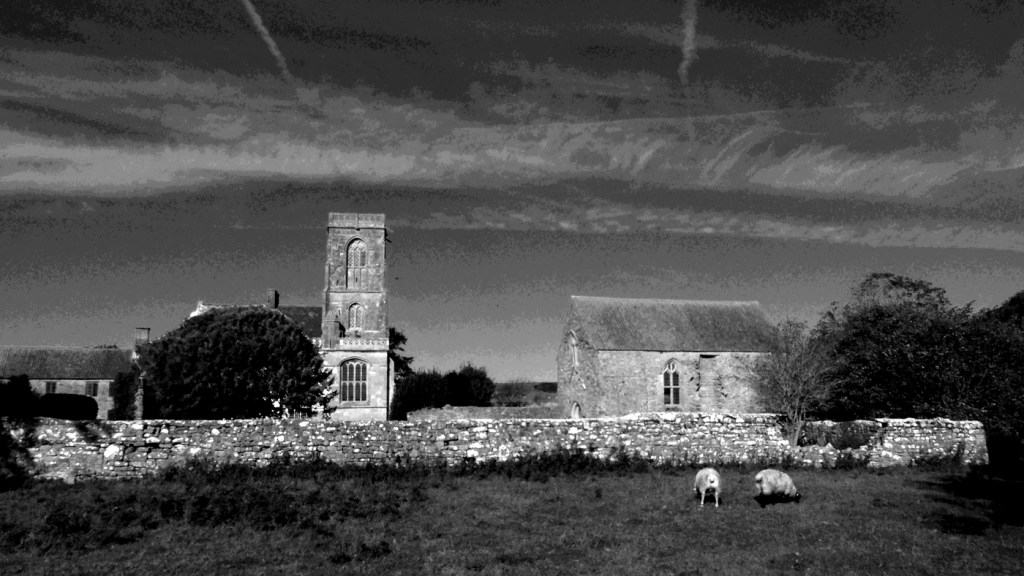
Dolebury Warren on the Mendip Hills:
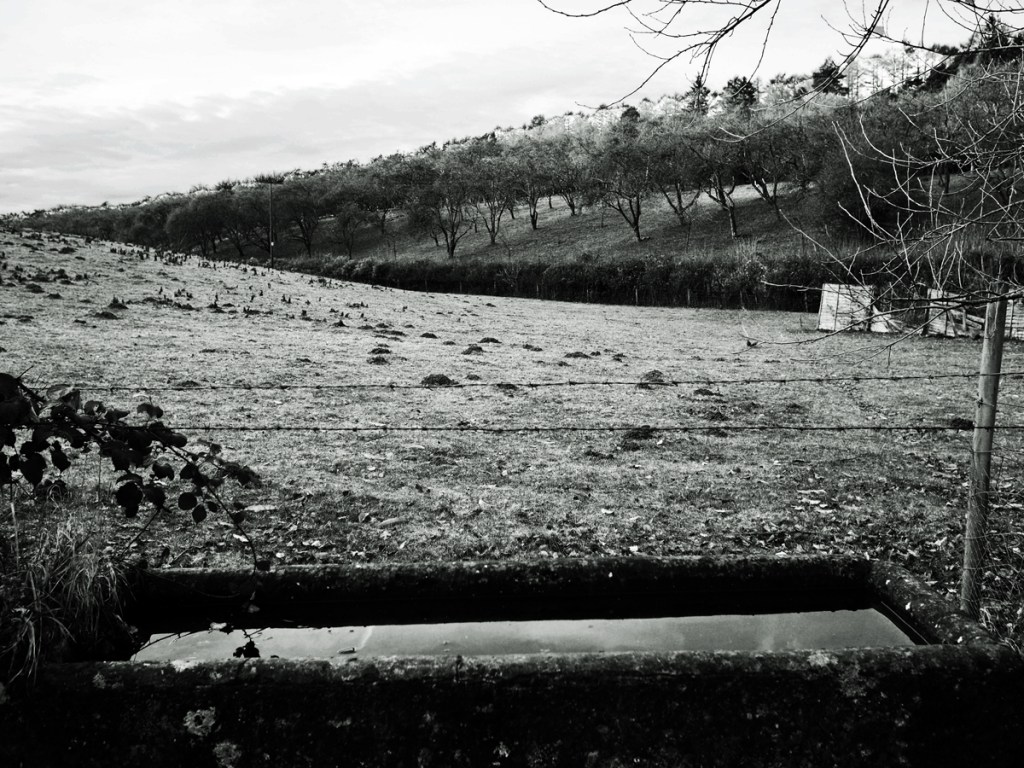
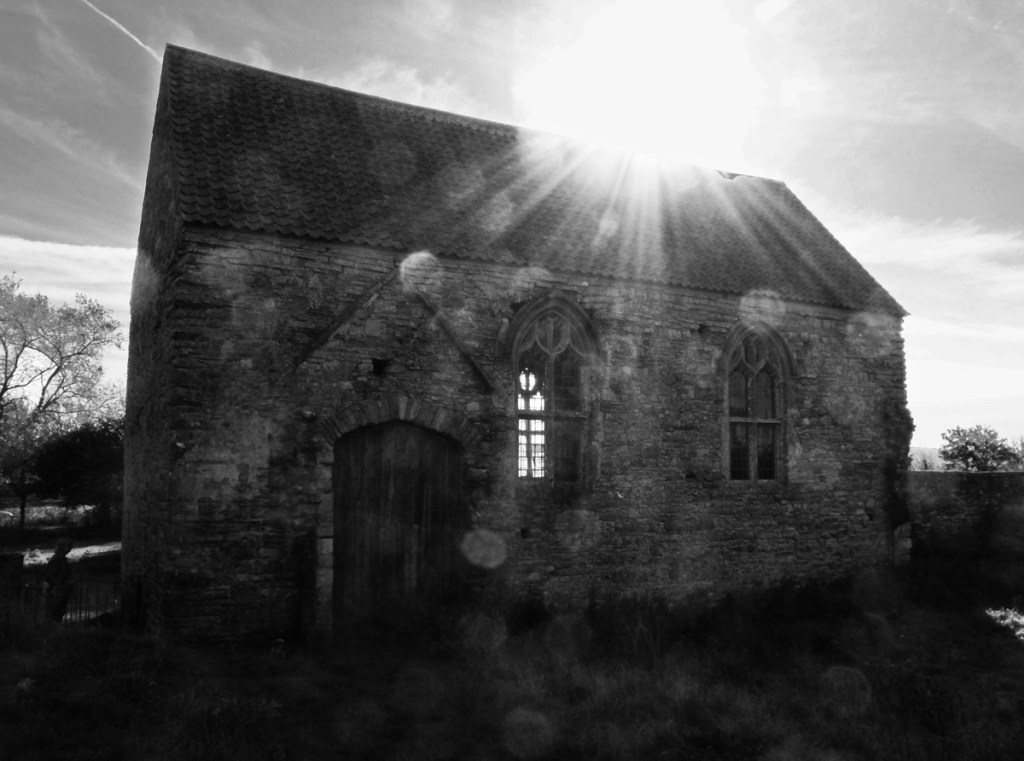
Water trough near Abbot’s Pool, Abbot’s Leigh:
Deny Island in the Bristol Channel, looking towards Wales:
Trees in Ashton Court, Bristol:
Sunrise over Portishead:
Dolebury Warren on the Mendip Hills:

Water trough near Abbot’s Pool, Abbot’s Leigh:
Sally painted this “Turk’s Turban” squash as it is more-or-less the last of this year’s allotment harvest, apart from some less-attractive butternut squashes and some chard. Actually, it’s the last of the allotment entirely for the next few years, as we’re giving it up. Not because I don’t enjoy it but because our travels, often spontaneous and sometimes protracted, do not work well with needing to tend the soil. Mid-September is the earliest we can leave it for as long as a month and by that time of year the weather in Northern Europe is getting cooler and the evenings darker. I’ll miss it, though.


During a walk after a day with Wendy, Graham, Di, John, Sarah, Steve, Emma, Darren, Joe and Ben. And many dogs.
2Sept2019:
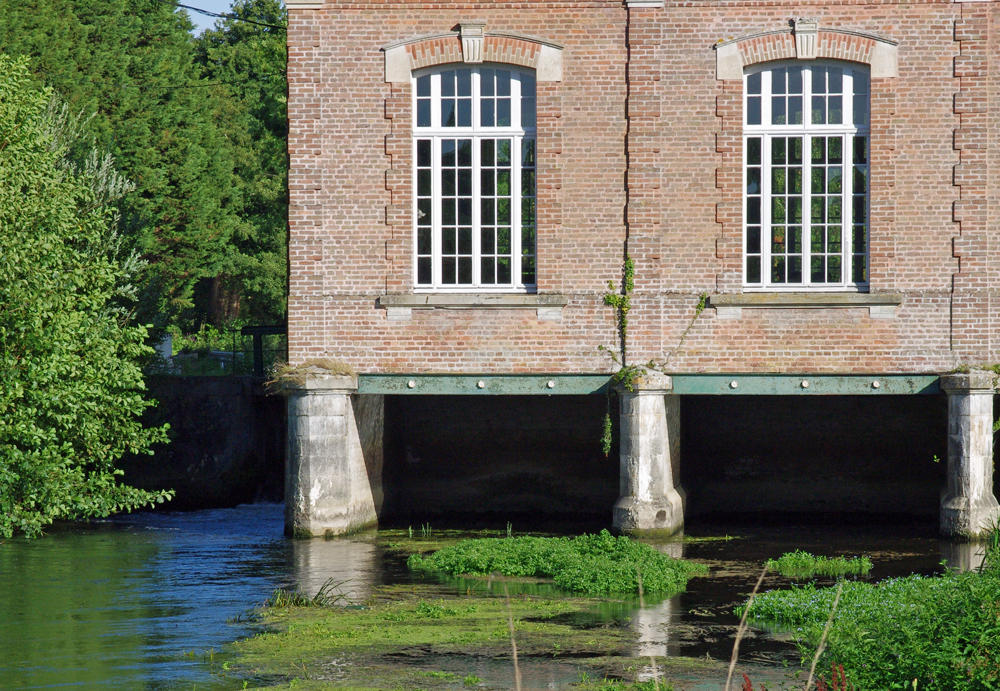
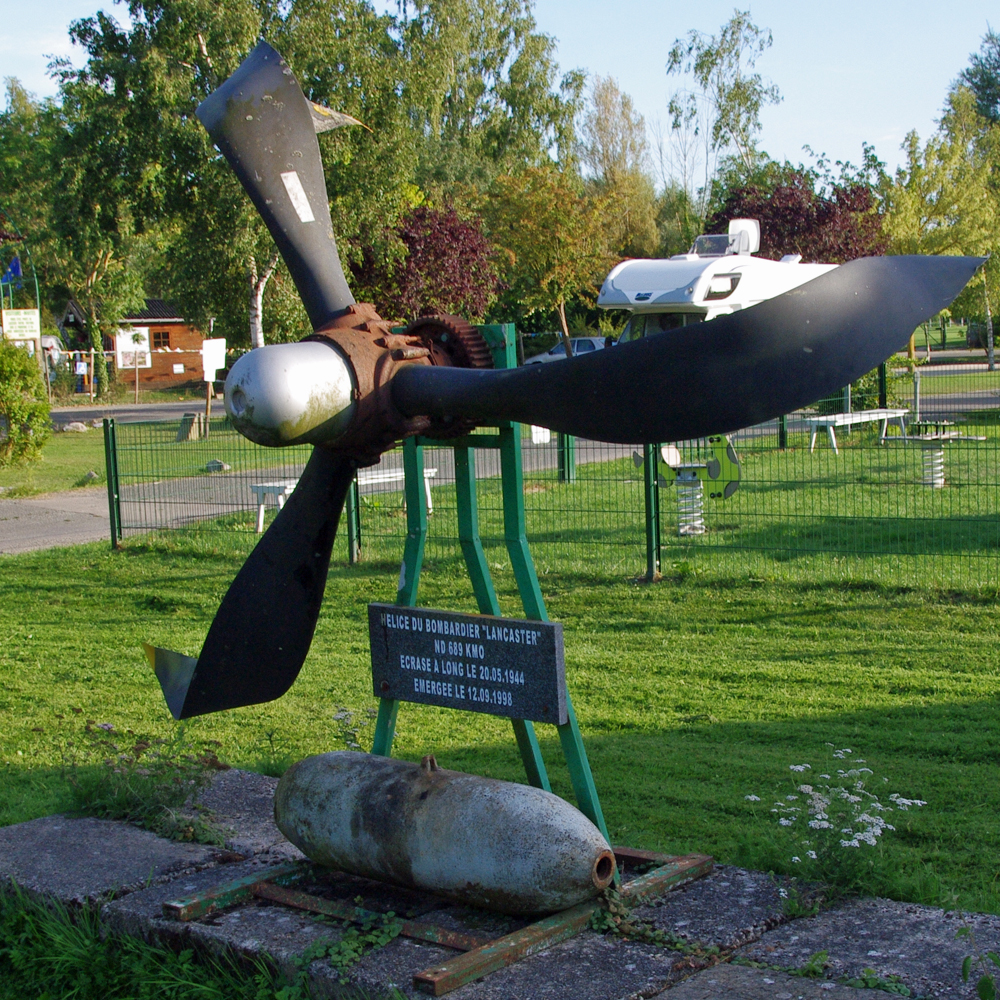
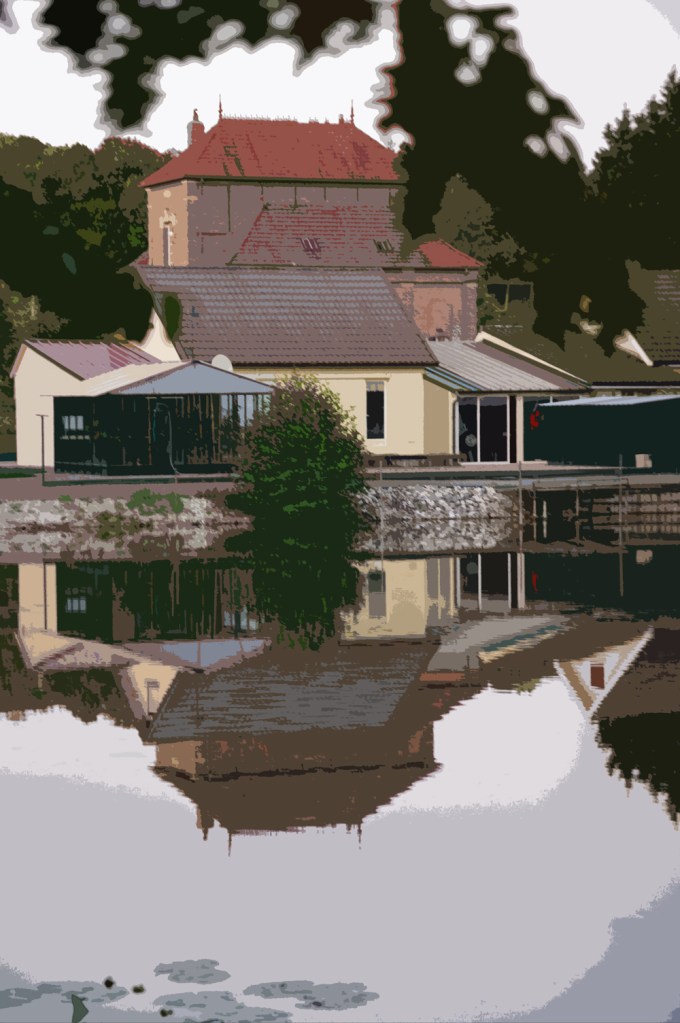
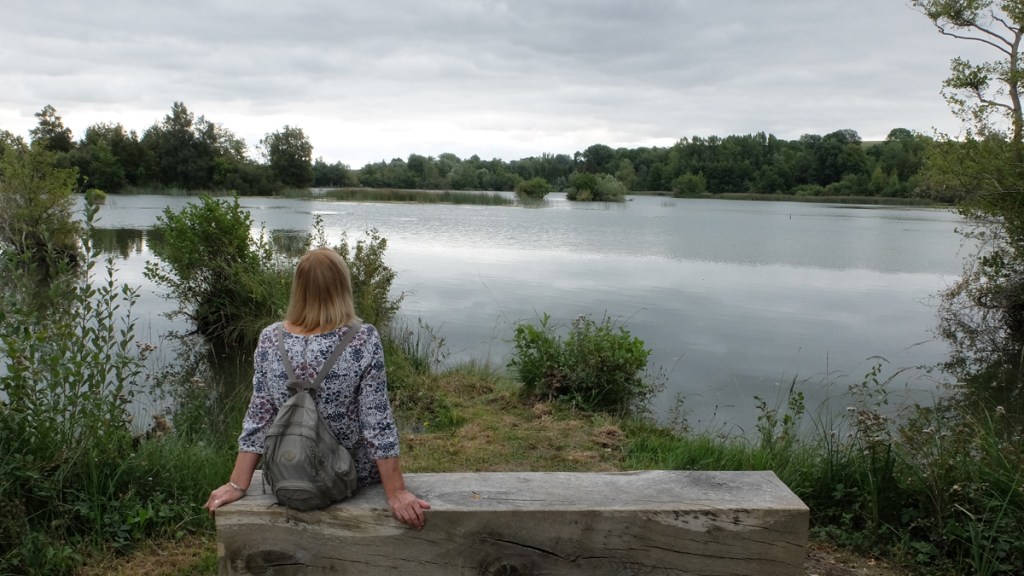
We caught the 10:00am ferry to Dunkirk and drove to a small town, Long, on the river Somme, south of Abbeyville. A marshy area with many lakes. The town has everything a self-respecting French town needs including a chateau, church, river-side walks, campsite, bar, boulangerie, small marina and assorted World War (I and II) memorabilia. As we intended to take our time travelling south through France, we stayed for two nights and had a day looking around.





4Sept2019:
We drove on up the Somme and stopped at Amiens but found that some public gardens Sal had wanted to visit were, in fact, closed. Stopped long enough for lunch in the market and a quick look at the fabulous Cathedral (where do those catholics get all their money?).
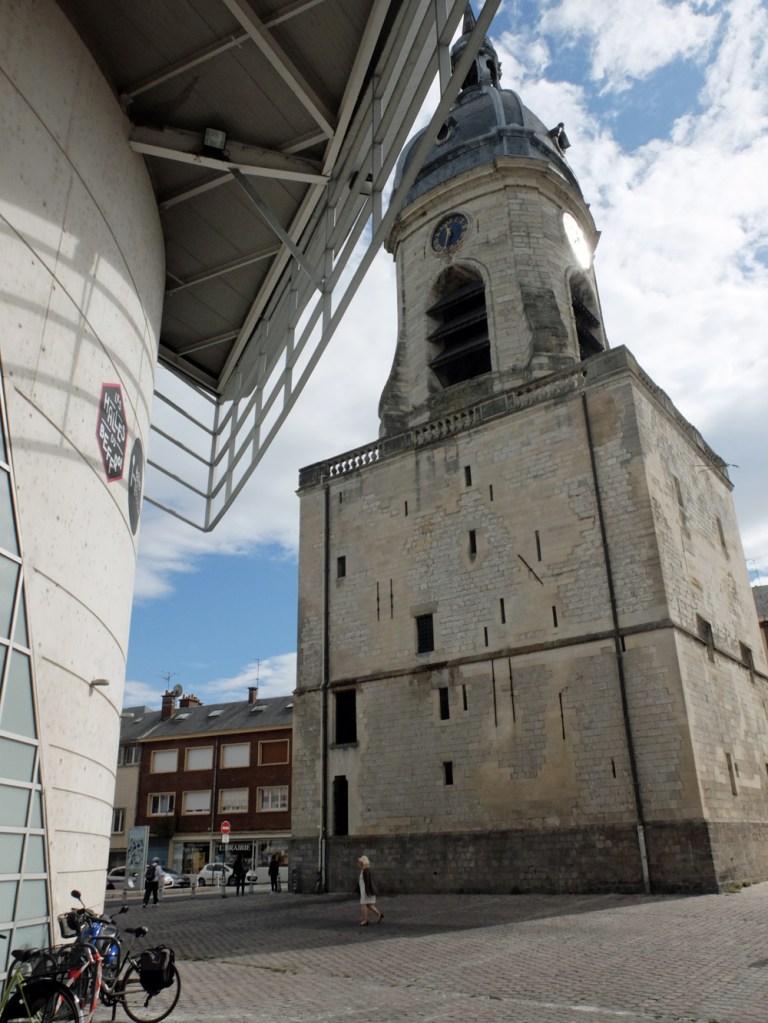

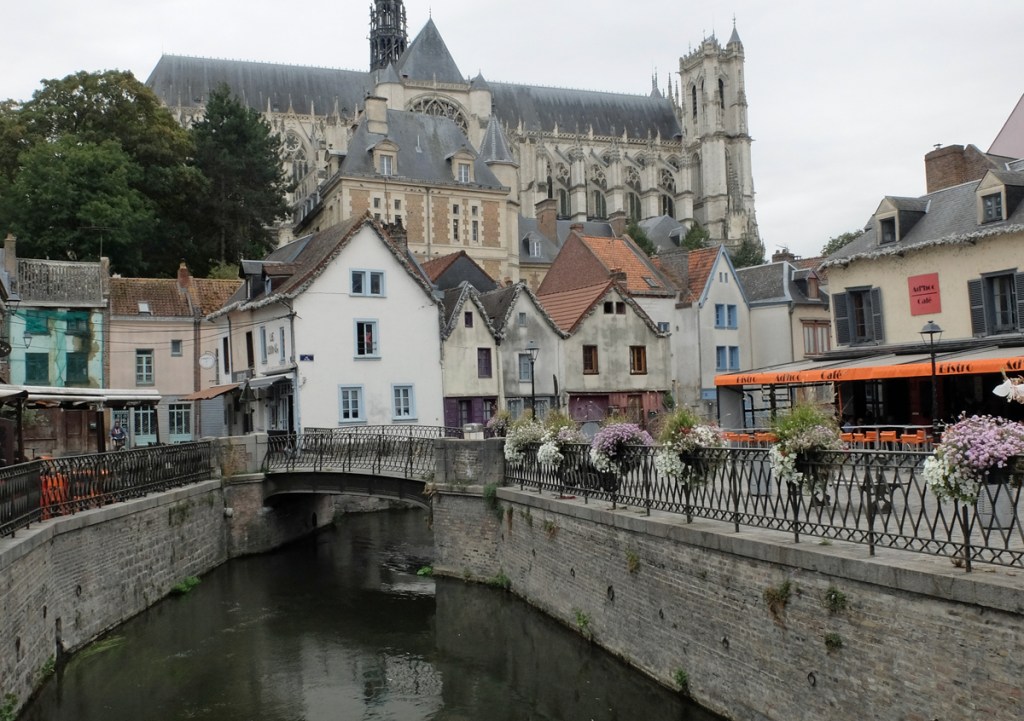

Then to Épernay on the river Marne. Épernay itself was a little disappointing. A pleasant-enough but unexceptional town, obviously trading on their twinning with Clevedon in North Somerset. And something about “The Champagne Valley”. We camped by the river.
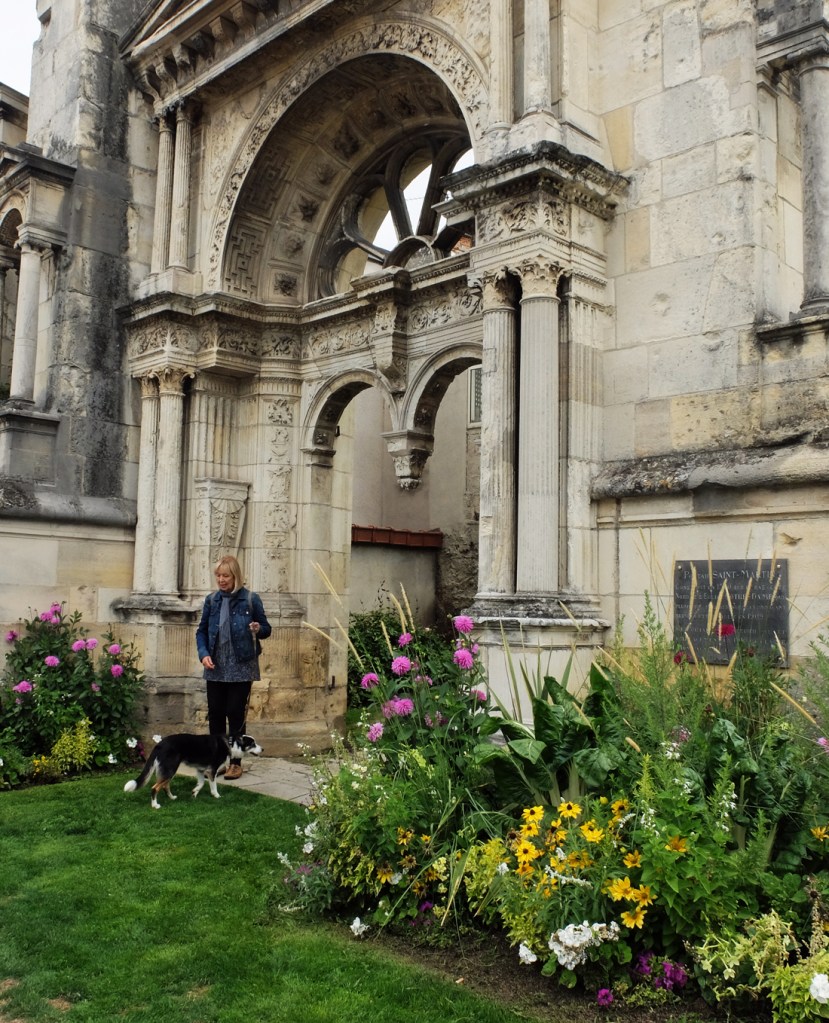
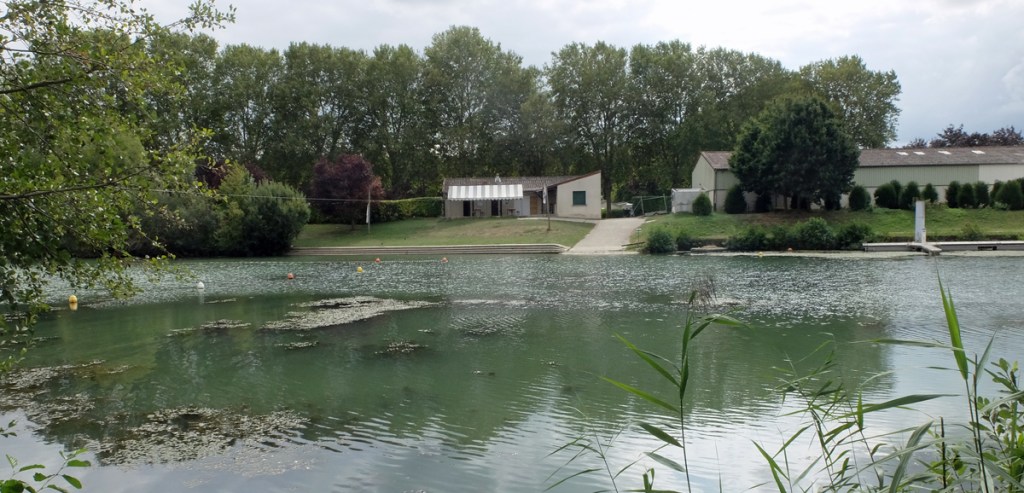

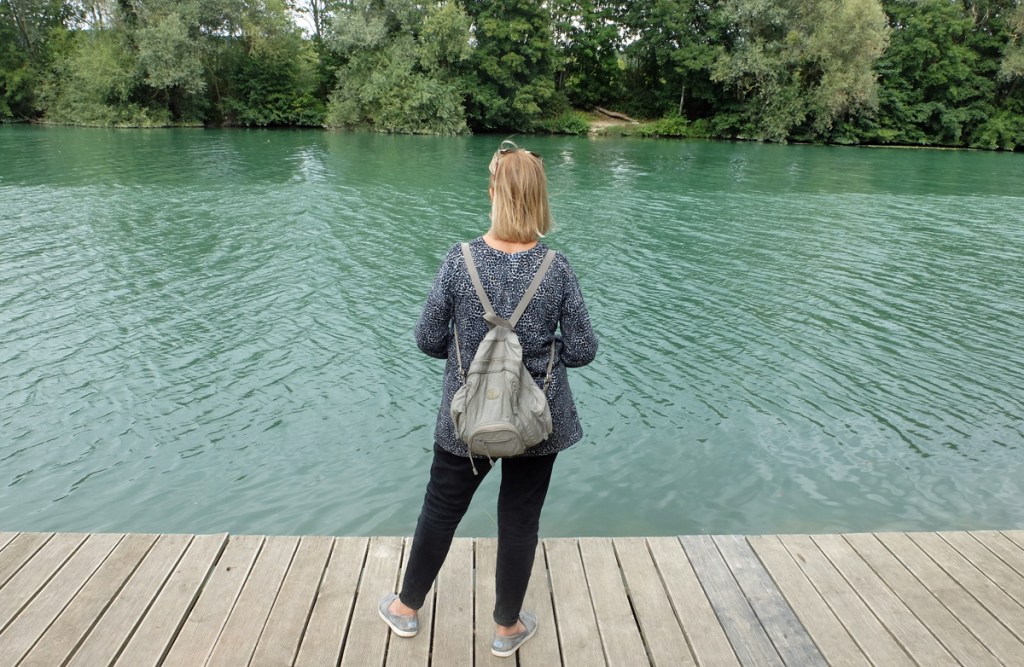

The campsite, and it’s location, was ok but expensive. We drove on up the Marne, through pretty towns and villages and, with the weather improving, too, we were beginning to appreciate the “Champagne Valley” at last. We had lunch by the Lac du Der, then on to a pretty town called Froncles, where we camped next to the river. Had an evening walk along the river and debated whether to stay for two nights.

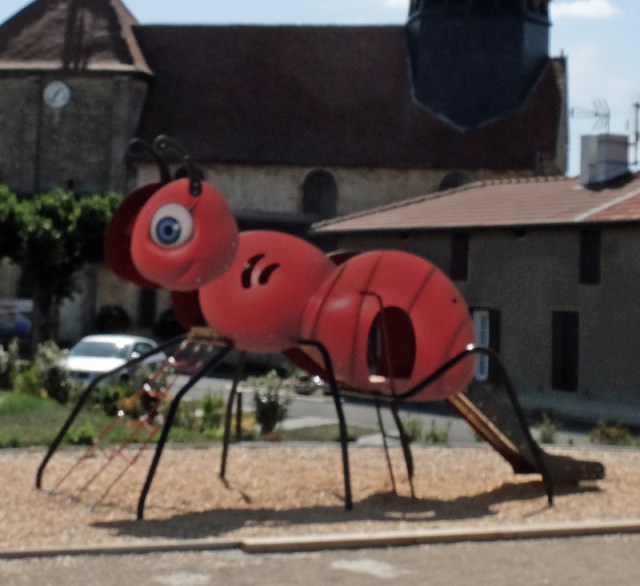

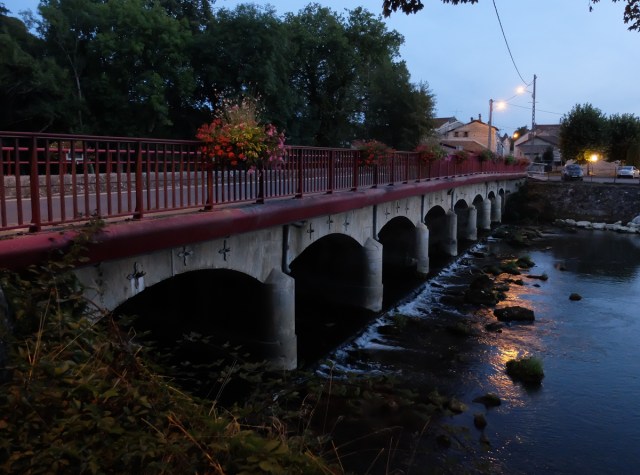


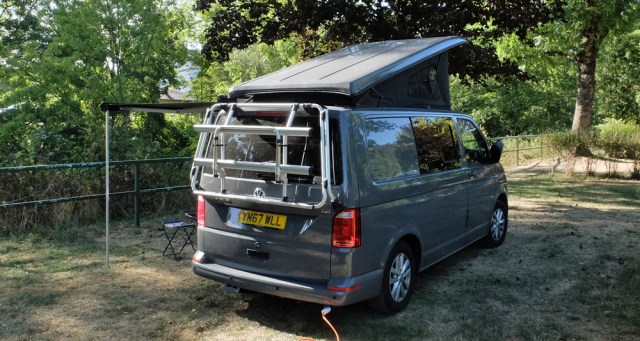
7Sept2019:
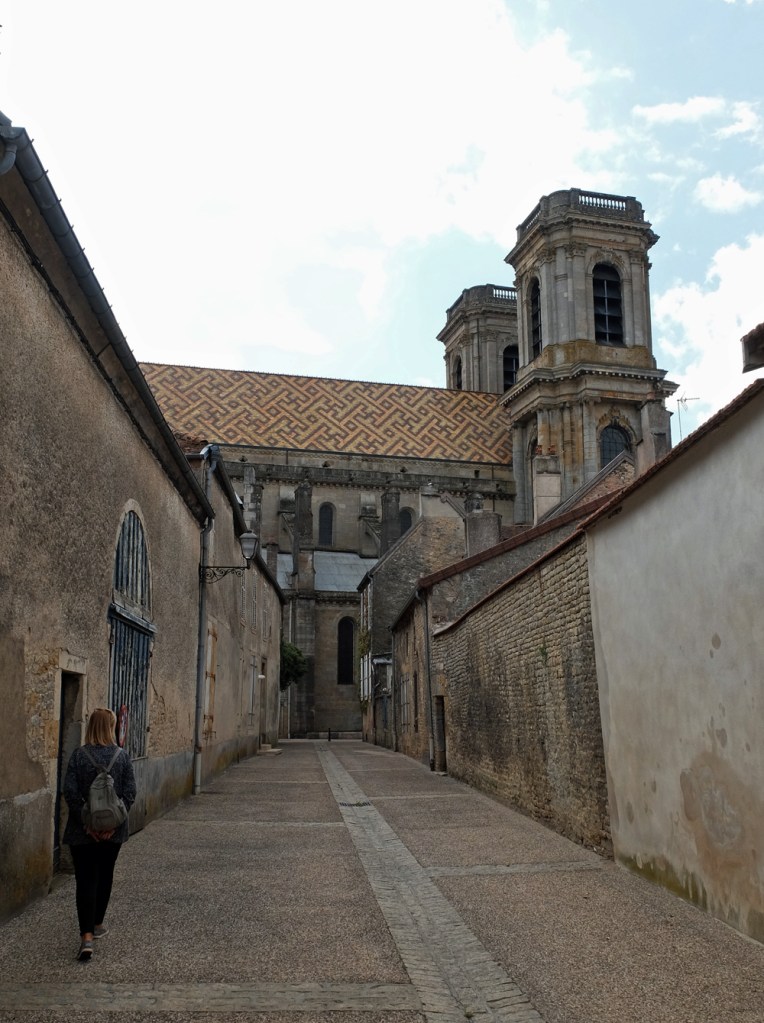
Although we liked this town and location, we had more-or-less explored it in an evening, so the next day decided to press on. We walked around a walled town called Langres, then via Nuits-St-Georges and Beaune to Chagny.

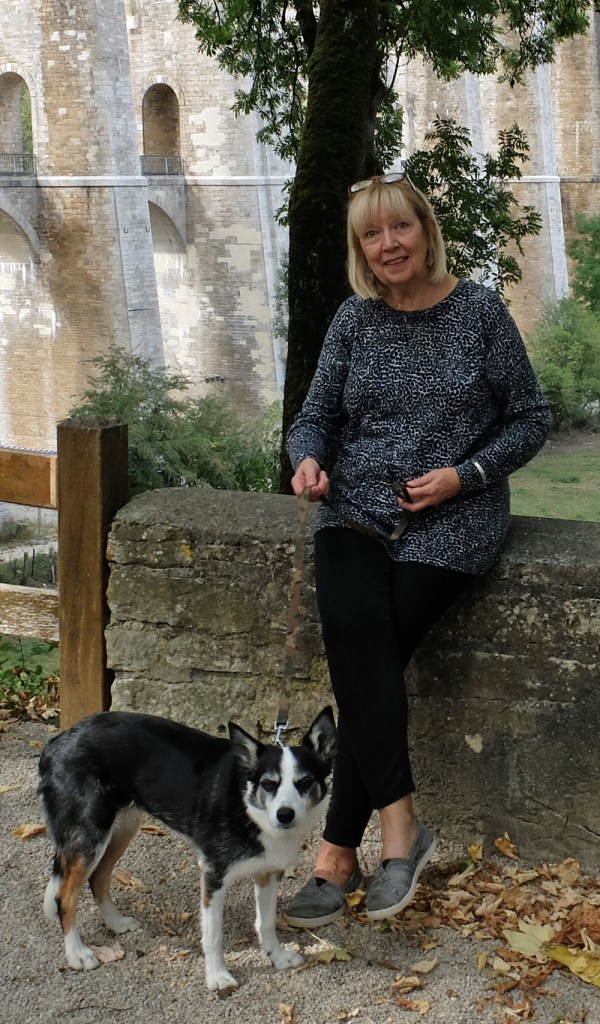
Near Nuits-St-George we happened to pull into a small lay-by in a hilly section of road (probably to check directions or track down a rattle in one of the cupboards, or something) and realised that we were on a viewing platform for a fantastic viaduct. It was in such good condition that we assumed it was relatively new and therefore not considered to be a tourist attraction like, say, the Roman aqueduct in Segovia in Spain or the Pont du Gard, further south in France (and now totally commercialised). This viaduct, we later discovered was the Chaumont Viaduct and was built in 1855/6 and repaired after some war damage in 1944. Still used for rail and foot transport, on different levels.


8Sept2019:
It rained overnight, which does little to ease one into early-morning campervan routines. Being “old hands” now, we’re usually ahead of the forecasts and pack anything up (including the awning) the night before if we think it might rain. We drove to Chalon sur Soane (yes, we’re now following the Soane) and called into a supermarket for supplies.
We took a road to the south-east which led through Bourge in the Bresse region. We had been attracted by what looked, on the map, like hundreds of small lakes, the Dombes Lakes. We managed to have lunch by one of them, next to a bird-spotters’ hide, but generally they were difficult to access from the road. There was at least one tourist attraction, family day out type of “réserve d’oiseaux”, but not our sort of thing really.

Then we drove on south around Lyon (nice city but been before and can’t do everything) and through Vienne, a very attractive and stylish town which we’ll have to explore at length some other time. We turned away slightly from the Rhone and camped up in the hills in a little village surrounded by vinyards, called Ruty (sometimes spelled Rutie). Had a walk around the area. I’m ashamed to say I stole a small bunch of grapes. They were very nice, and would probably have tasted better if they’d been guilt-free.

Groups of youngish people arrived late last night at Rutie. Sal and I haven’t decide whether they are grape pickers or Camino-type pilgrims. They’d left before we got going this morning so we remain in ignorance. We drove southwards and stopped at Tournon, where, we realised, we had camped twelve years ago by the river in Freda (the old camper) en route to Valencia after Rob and Sophie’s wedding. Tournon is very nice. We walked around the old town and bought some lunch. I was sad to see a proudly-displayed EU flag over the old bridge. I don’t know if the UK ever genuinely had that inclusive enthusiasm for the EU. Hence our tragic (in my opinion) drive to get out at any cost. On, then, still down the Rhone, when we were attracted by the name of Bagnoles sur Ceze. We are very familiar with Bagnoles de l’Orne in Normandy, so thought we should check out its namesake. Stayed at a fantastic (Dutch-owned) campsite next to the river.
9Sept2019:


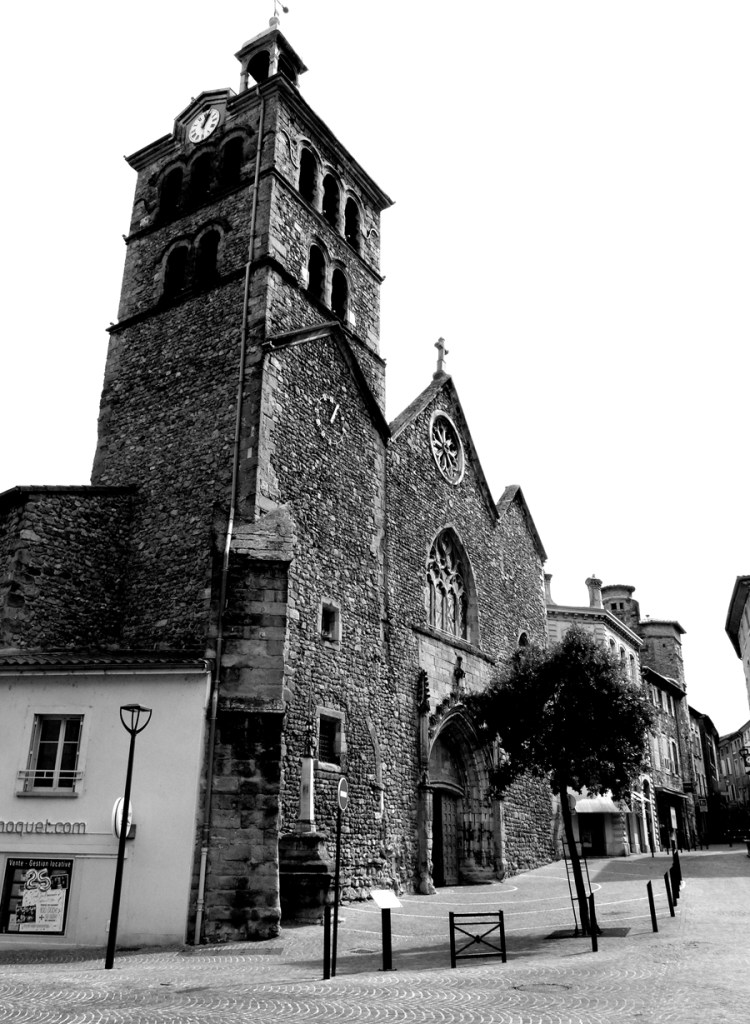
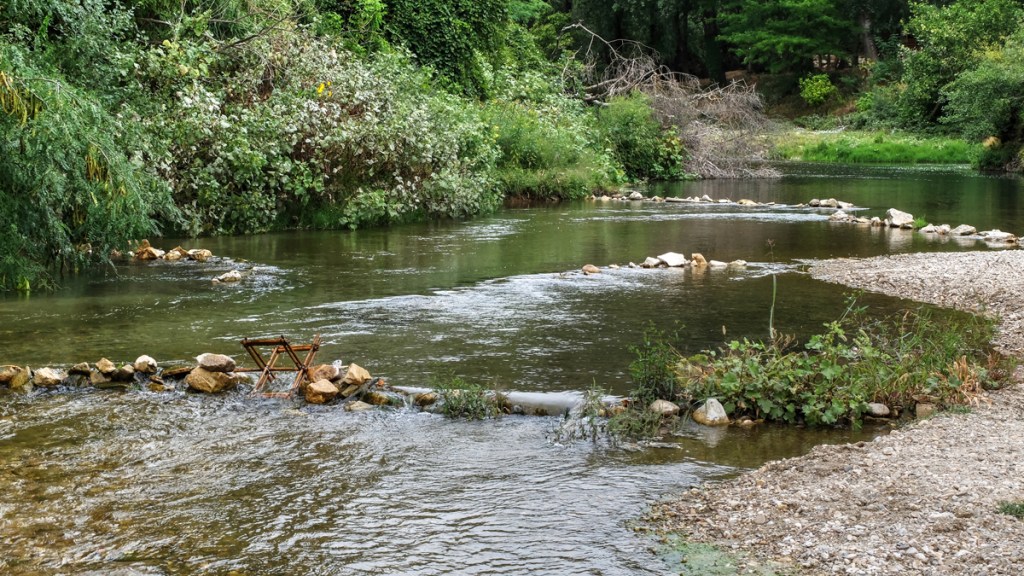

10Sept2019:
After a lovely day yesterday it rained during the night and continued during the morning. We headed towards the Pont du Gard Roman aqueduct. I remember visiting this impressive structure in the nineteen-eighties, when I’m pretty sure you could just drive up to it and take a few photos, maybe even walk over a bit of it. Not any more. It’s now a “visitor attraction” and any view of it is carefully manged to ensure that money is collected in exchange. There are coachloads of people arriving all the time and the museum, cafes, etc., are thriving. Although it is still possible to walk, free, through the site, it seemed that all opportunities to park the camper within a few kilometers had been removed so we decided to give it a miss. As it happened, while we were deciding what to do, Sal noticed we were parked next to a large advertising poster, so I took a photo to, sort of, prove that we’ve been there. I’m uncertain whether any copyright has been infringed, but if so, consider it acknowledged.

We contined south, only stopping for fuel and groceries (Lidl in Istres) as it was a drizzly day. Getting warmer all the time, we headed around the south-west end of the Etang (lake) de Berre to Camping Félix de la Bastide, on the south side of the lake.
11Sept2019:
At first it looked as if the damp day yesterday might be repeated but at about 10:00am the sun broke through the clouds and the rest of the day was a scorcher! We celebrated by doing some much-needed chores and setting up camp properly and spreading ourselves about a bit. There were three beaches more-or-less deserted beyond the campsite which we swam from. We decided to stay for a couple more days, partly encouraged by the fact that the site had a restaurant which supplied good moules and calamari dishes.


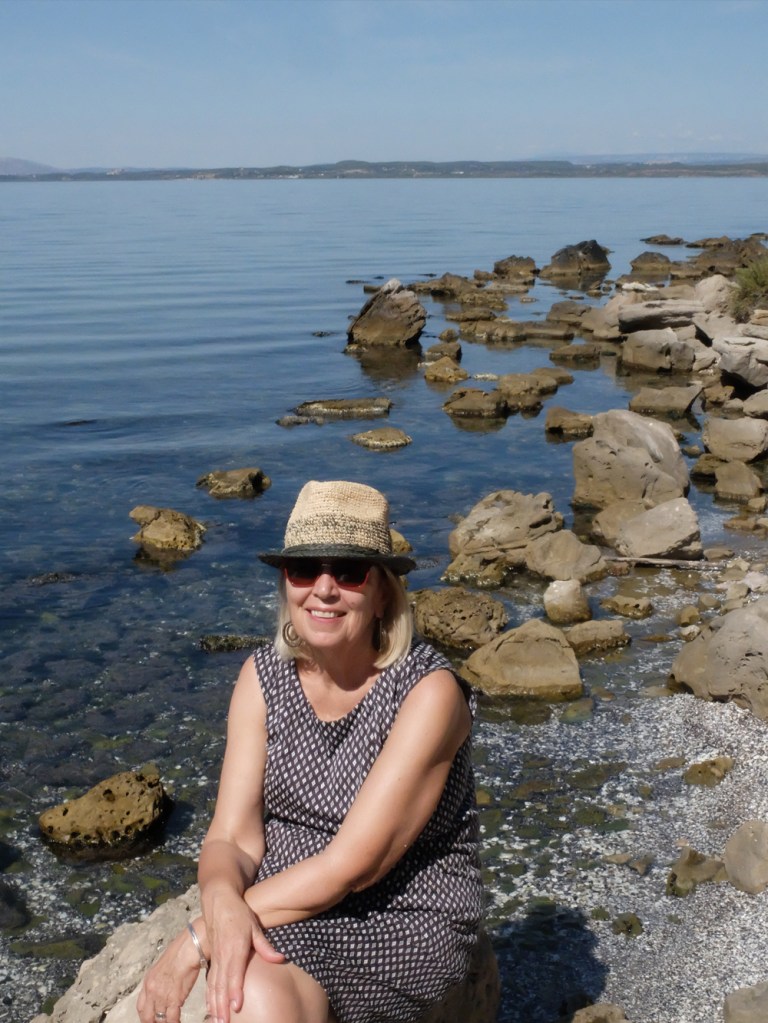


13Sept2019:
We drove down the west end of the lake to Martigues, stopping at an Auchan en route. The “bayou” style of architecture, art and food is where, I suppose, the deep south of the United States originally derived it’s culture.


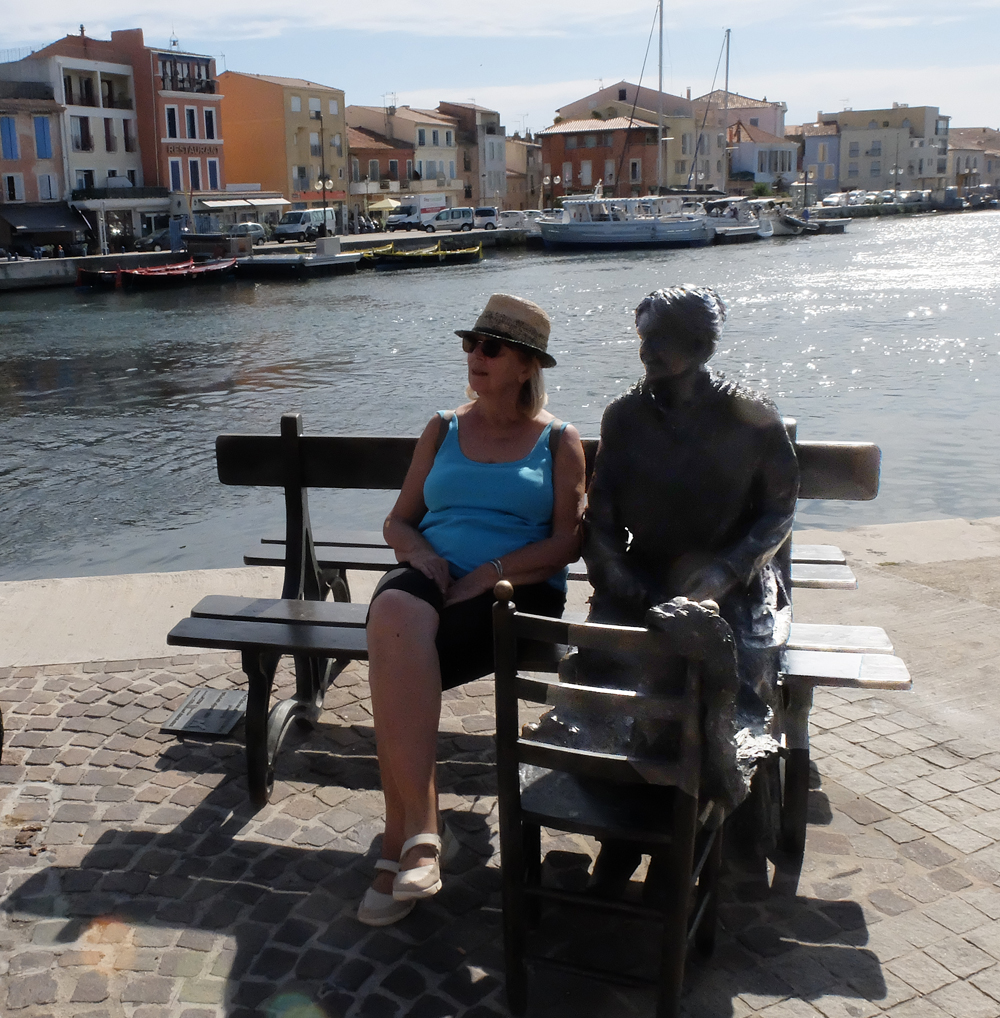

14Sept2019:
We had a leisurely pack up and drove west through the Carmargue region. We decided to miss Arles as, the last time we were here, it had become very commercialised with the centre clogged by tourist coaches and guided groups. It is a unique city and worth visiting for many reasons, but, well, not this time. When we were driving through the Carmargue a few years ago we joined a slow-moving line of traffic on a narrow road which eventually led, unexpectedly, onto a ferry over the Rhone at Salin de Girauld. We were prepared this time. We took some pictures of the salt pans (“Salin”) and the terraces of houses where the salt workers originally lived (holiday lets now), and then drove around the Etang de Vaccarés to a site west of Saintes-Maries-de-la-Mare. This was a very busy campsite, mittigated by proximity to a sandy beach. Travellers of all nations, mostly motorhomes, but some campervans and tents. Had an early-evening swim at the local beach. To add to the bayou feeling, the river Rhone turned into a series of lakes and swamps here, and a large paddle steamer was plying for trade a couple of hundred metres to the west.


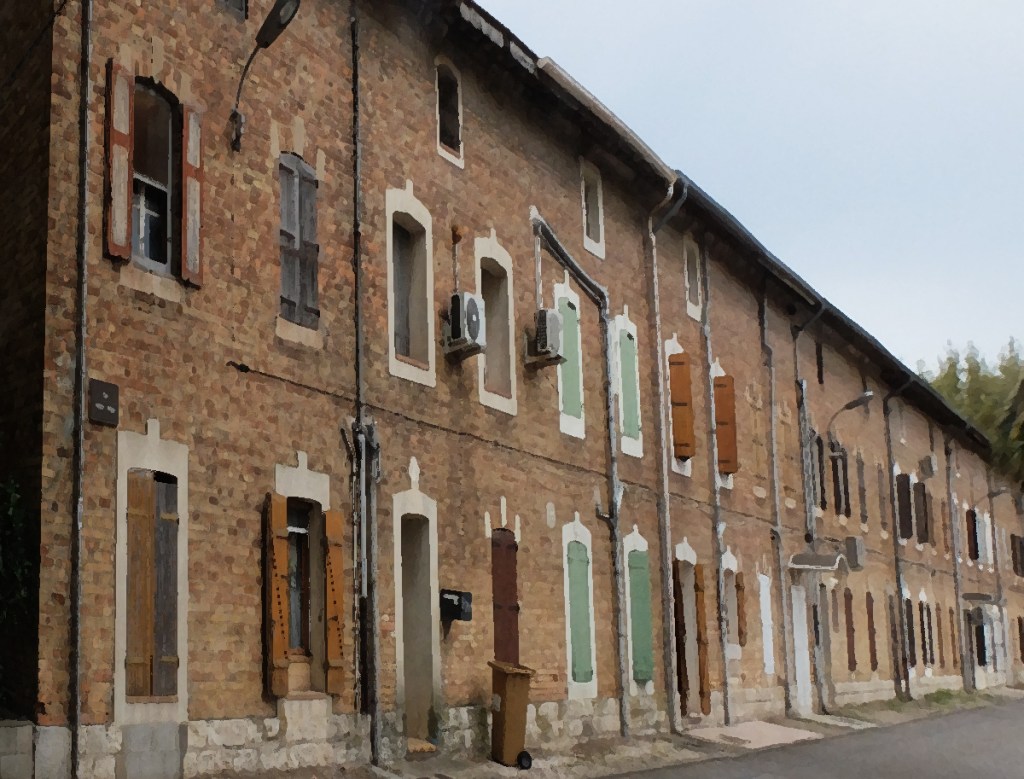

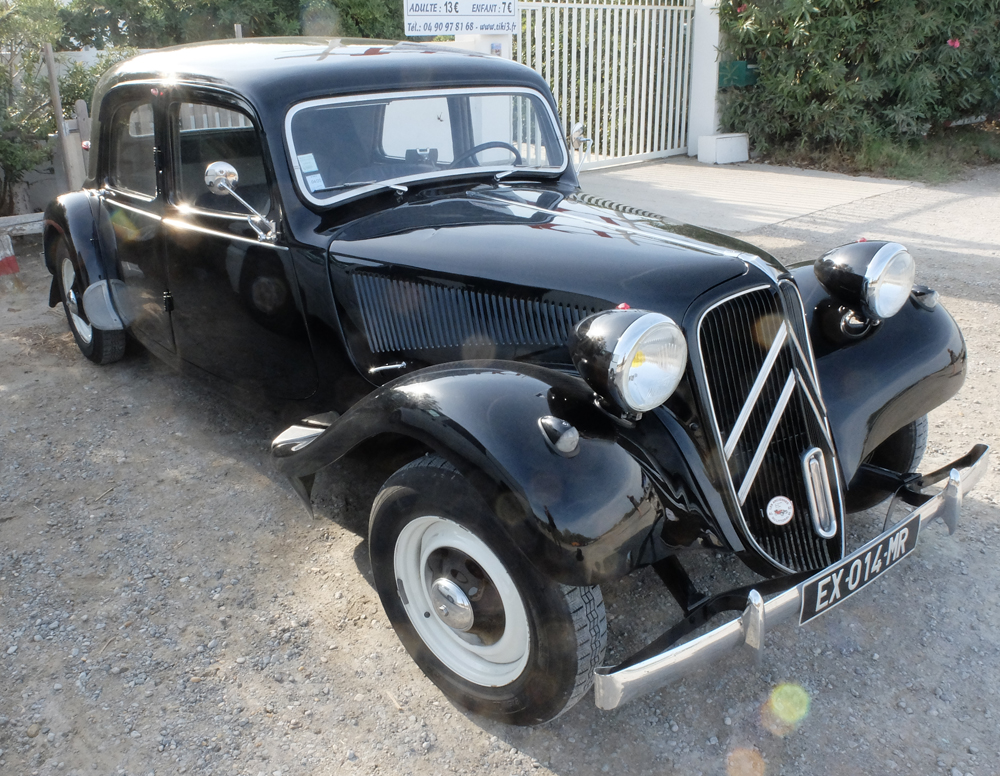

15-16Sept2019:
We walked along the sandy beach for a mile or son into Saintes-Maries-de-la-Mare. It’s a nice town, very touristy, but in a pleasant, unpretentious way. Bought lunch in a market, and a “throw” for hanging over the camper’s wind-out awning. It’s over 30°C now and we need shade! In the afternoon we swam off the local sandy beach again. Lucy, who is feeling the heat even more than we are, I think, barked in frustration at some small children. We always feel awful if this happens, for about five minutes, then think, what the hell, no-one’s dead, it’ll teach them to be more respectful towards dogs!


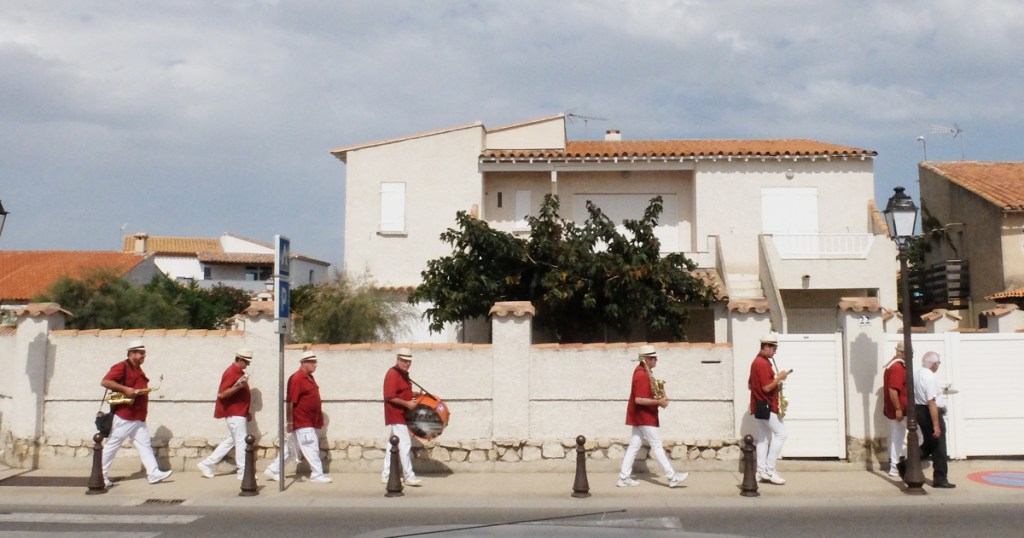
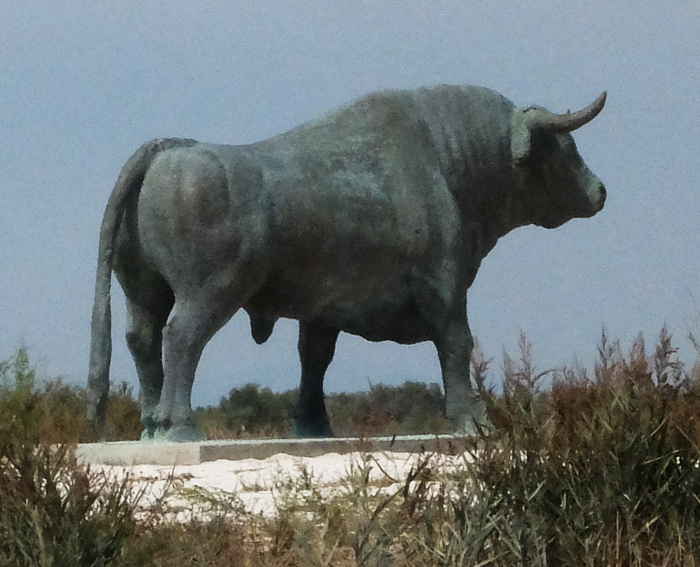

17Sept2019:
A long, hot day driving west away from the Carmargue, through various nature reserves, along the causeway to the south of the Étang de l’Or to Sète and Agde then a site in Colombiers to the south-west of Beziers. A whole day without photos! The Canal du Midi starts in Agde and, although we have passed over it from time to time over the years, we have never followed its course.
18Sept2019:
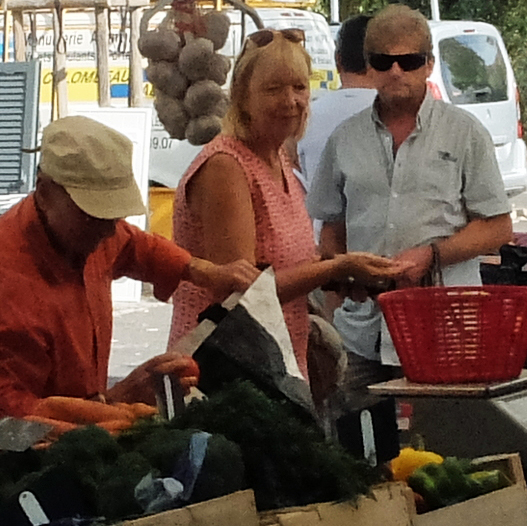
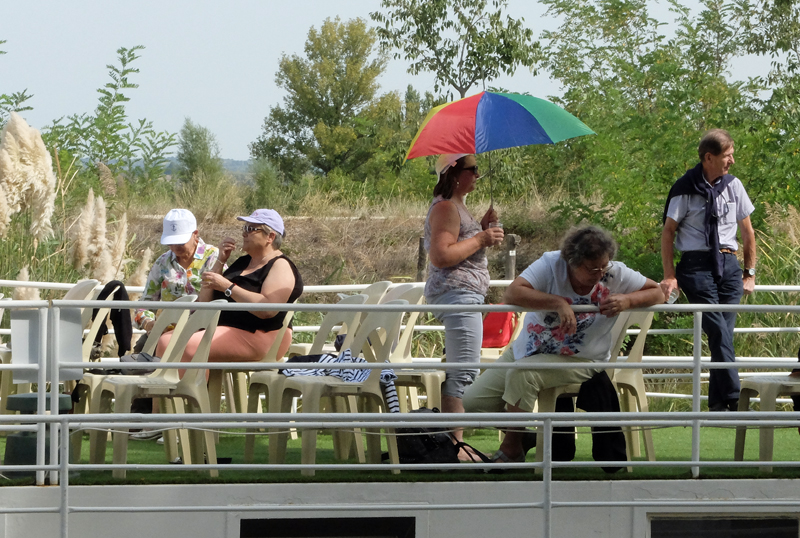
We walked into Columbiers. It’s a lively place, due in part to its location on the Canal. Lots of British as well as Germans, Dutch and American, and French of course, all “doing” the Canal du Midi, either by boat, cycle or foot. Plenty of bottles opened on board well before midi. Plenty of old and new buildings, many bars and restaurants, a marina, sat on an island, unusually in the middle of the canal (maybe, with the benefit of hindsight, it was a river at that point).
In the afternoon, as it was hot, we had a swim at the campsite (there was a very nice, unused, pool) and lazed around, reading and some minor maintenance on the campervan. Later Lucy and I walked a mile or two to the north-west along the canal. After a hot day, spectacular thunderstorms during the night.





19Sept2019:
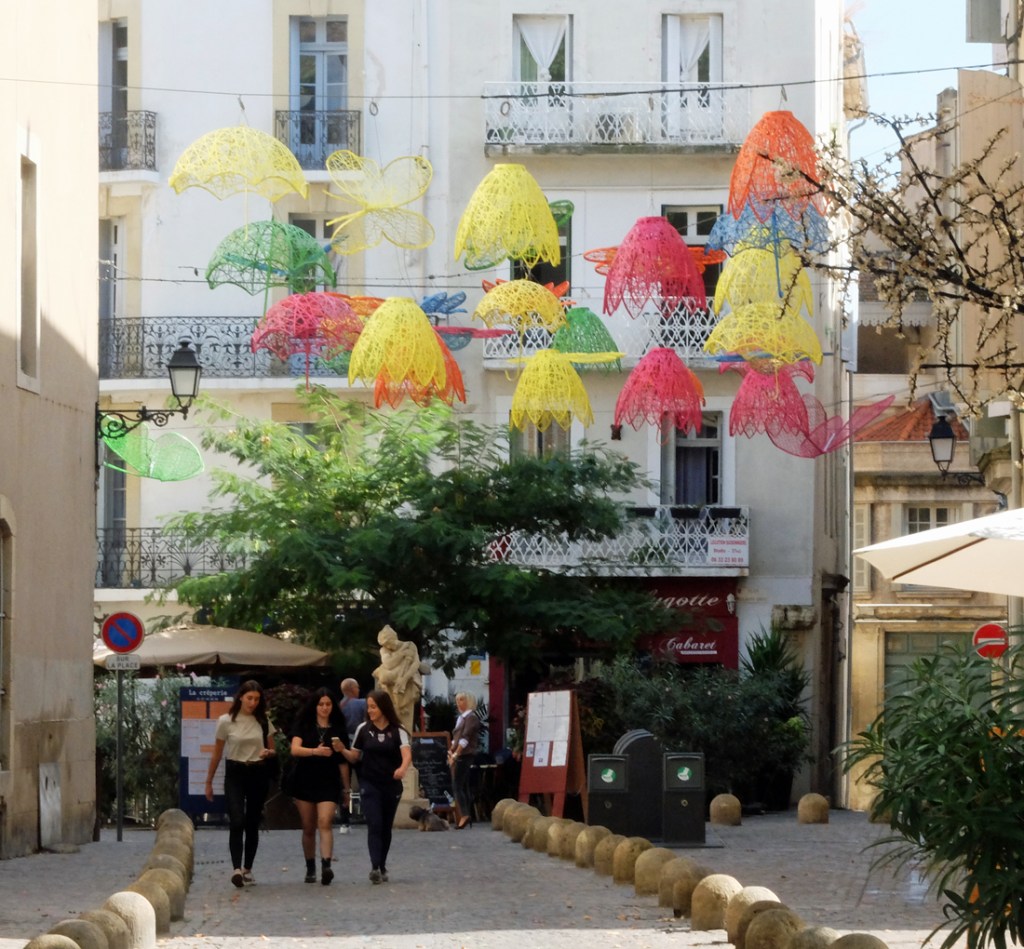
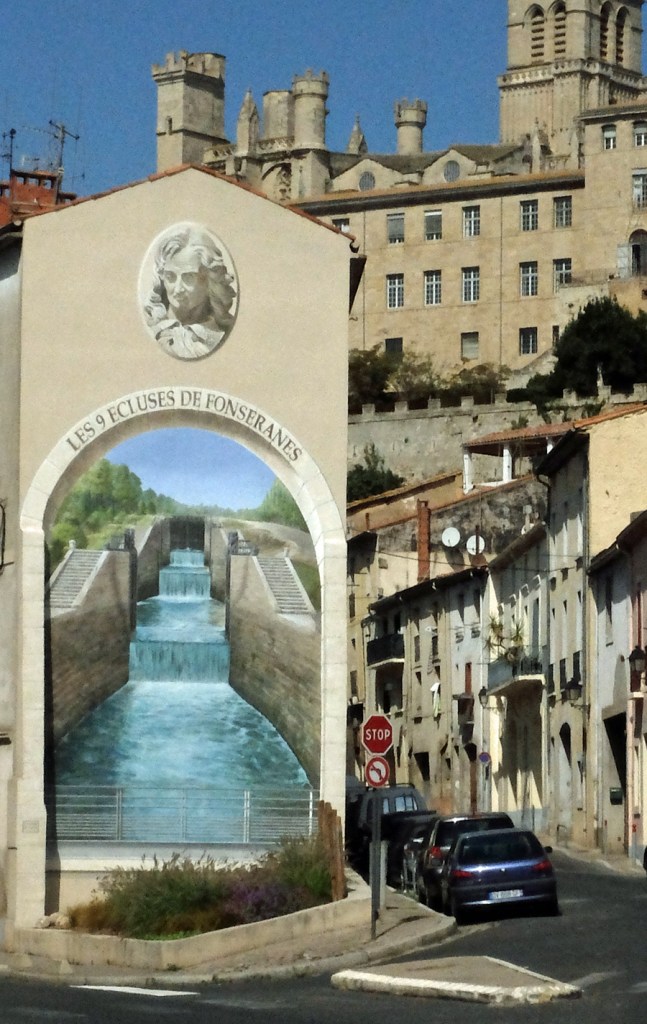
We slightly retraced our route and visited Beziers, where the Canal du Midi crosses a loop in the River Orb.


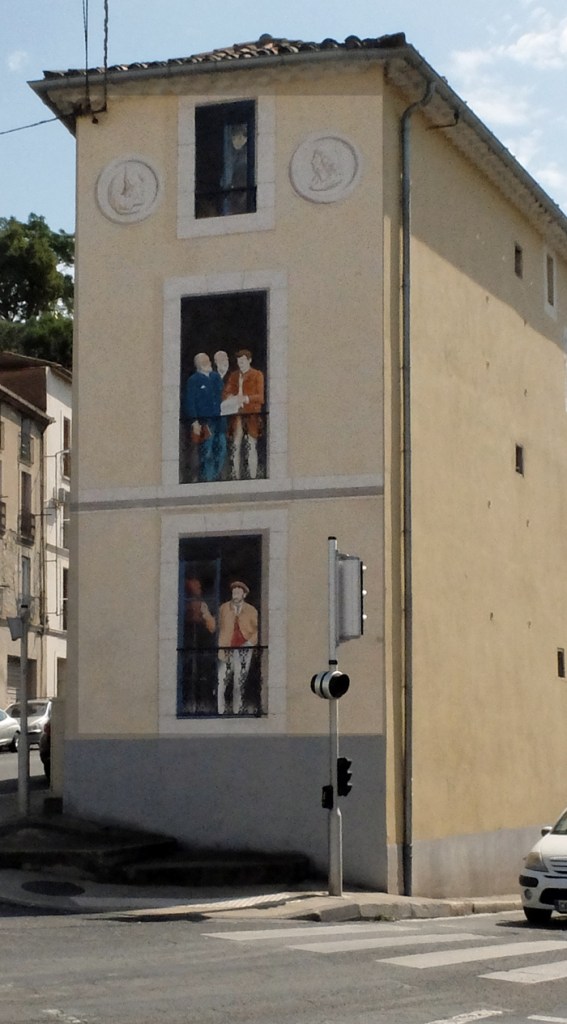


After Beziers, we drove north-west along the Canal du Midi and eventually, after stupidly following some “road closed” signs which took us, unnecessarily, miles out of our way, we found a really nice Dutch-owned site at a village called Rustiques.
20Sept2019:
We walked from the site, over fields and through woods (many damaged by fire) to Trèbes, a town five or six kilometres to the east of the city of Carcassonne (we visited Trèbes last night when we were trying to negotiate some road closures). The town has narrow, twisting streets which seem quaint unless, I guess, you have to actually live in them; some seem very substandard. The town is typical of those in the area in that it has been transformed in the last few years by the “Canal du Midi Indistry”, i.e. lots of hire boats, marina-side restaurants, hotels, self-catering cottages, Brits, Germans and Americans, among many other nationalities. All very nice, particularly on a warm, sunny day, like today.


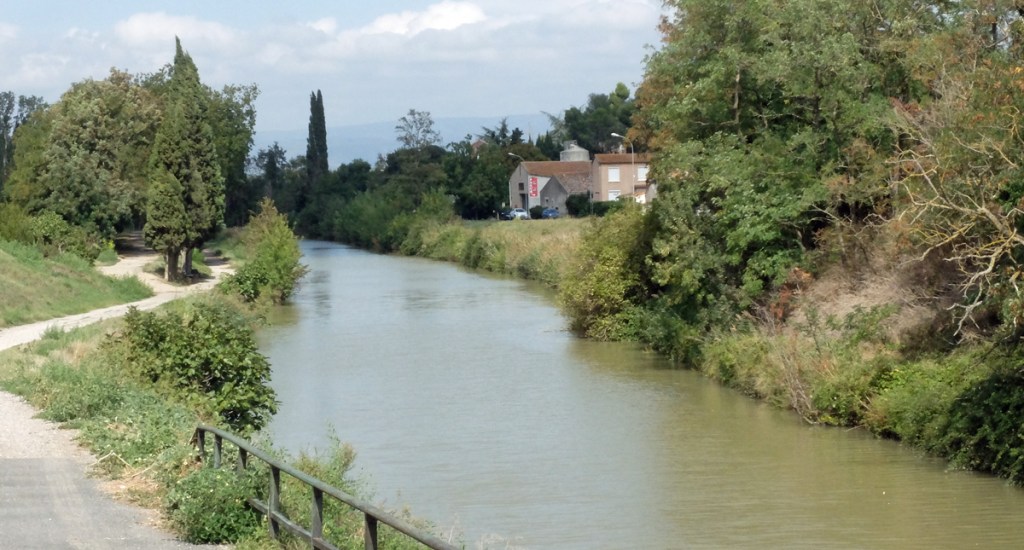

Then later we returned to Rustiques and strolled around the village, then a swim in the campsite pool.

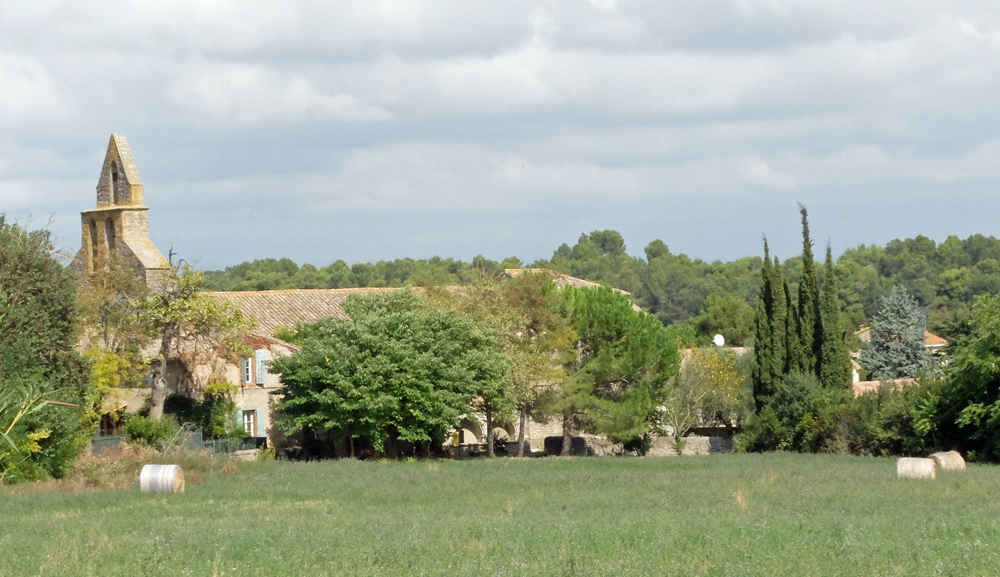
There are some huge fig trees around, available for general public pickin’. Seem to be the equivalent of blackberries in the UK.

21Sep2019:
Heavy rain overnight, for which we were prepared, so not much left to do this morning. Even so, we didn’t leave Rustiques until about 11:00am, we’re rarely earlier than that, unless for special reasons. Drove through Trèbes, again, and to Carcassonne, a true city with an old centre, but also with “Le Cite”, a fortified, hilltop, area which reminded us of Le Mont St Michael in Brittany.


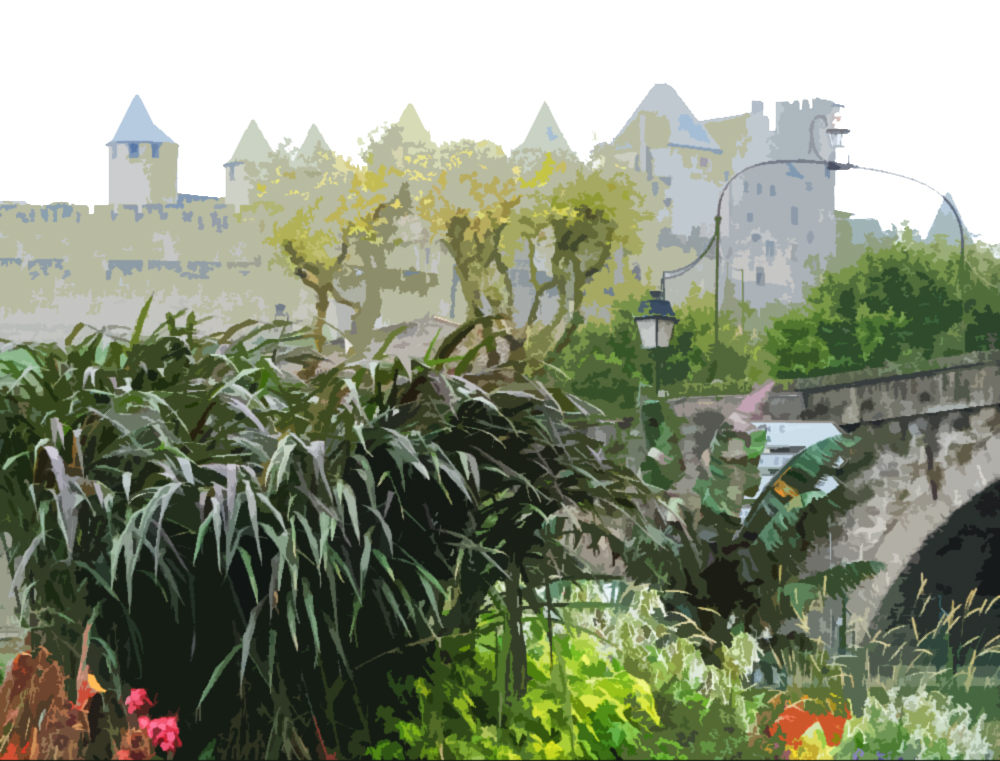
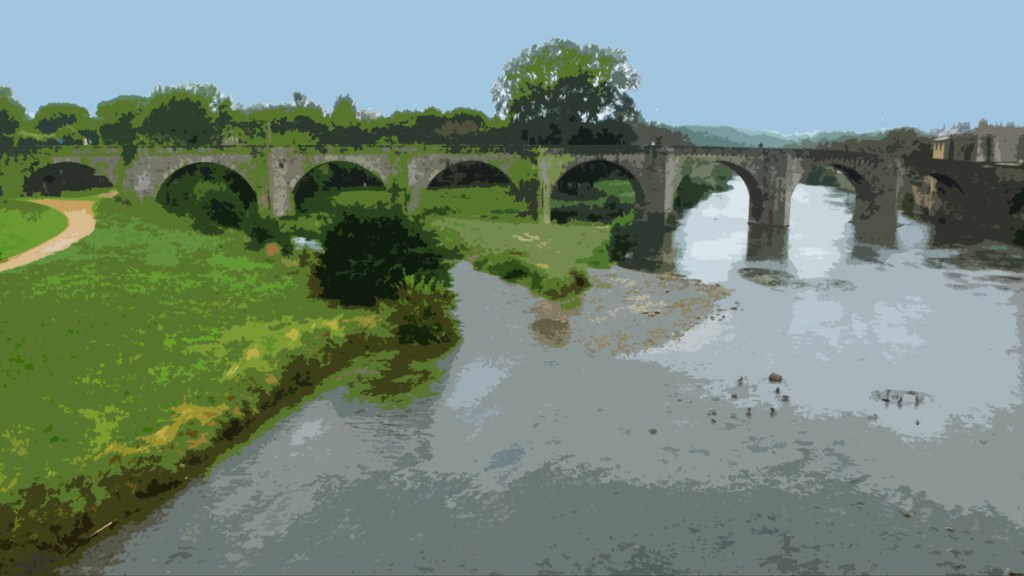
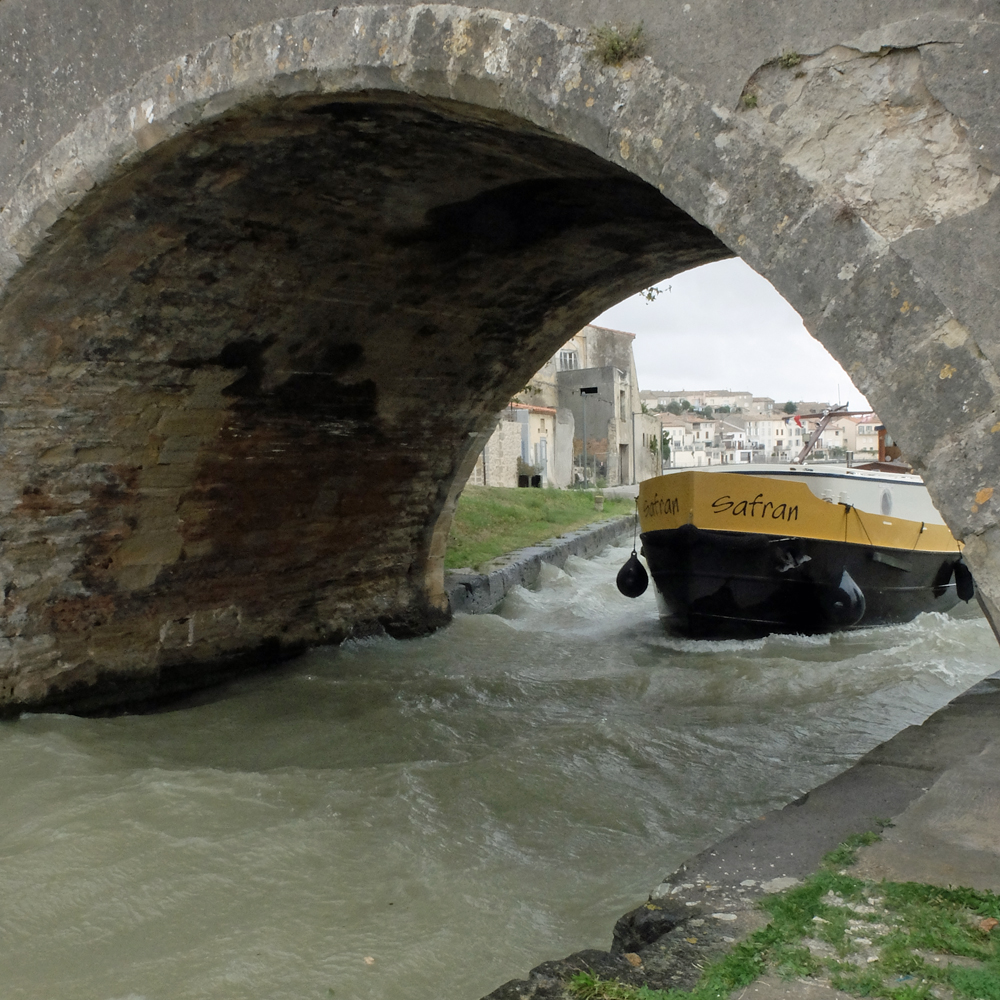
Still raining, we drove on to a town called Castelnaudary, on the Canal, a nice, scruffy, town with a large basin and marina. By now there was a strong breeze and boats were being tossed about by the waves, which is not good on a canal.

Then we drove up into the hills looking for a campsite, but the only one we found seemed isolated (not in a good way) and windy and rather regimented, so we came back down to the Lac de la Thesauque to a wooded site with a restaurant and other cafes, etc. There was a wedding party, all having a good time.


22Sept2019:
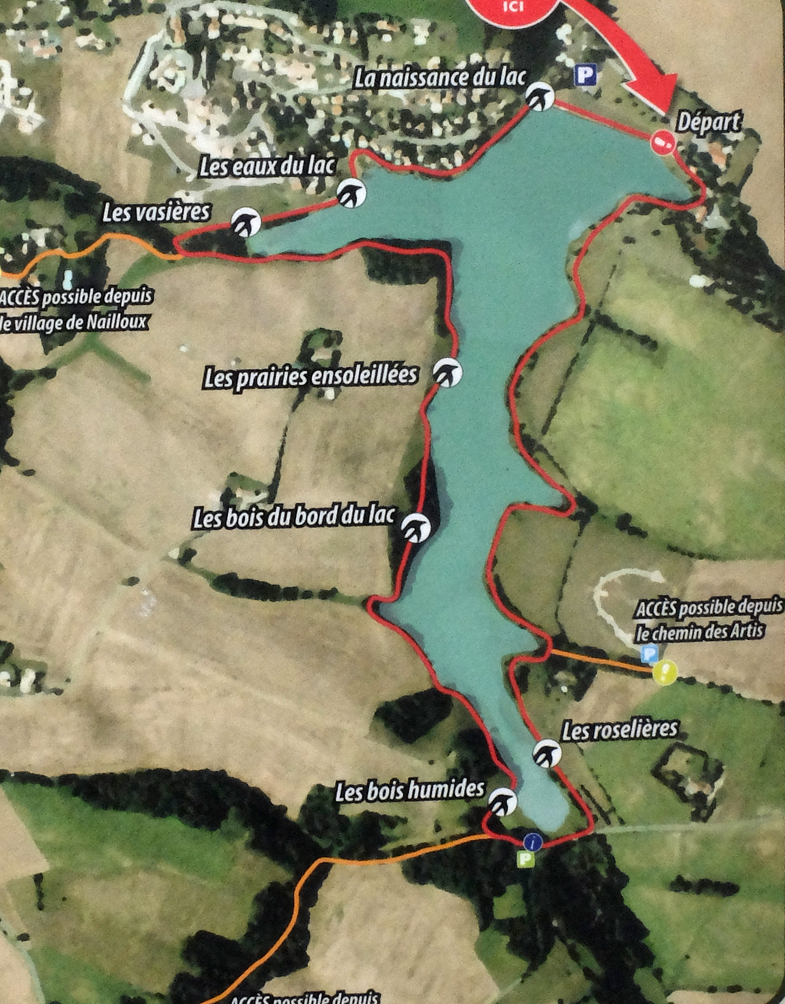
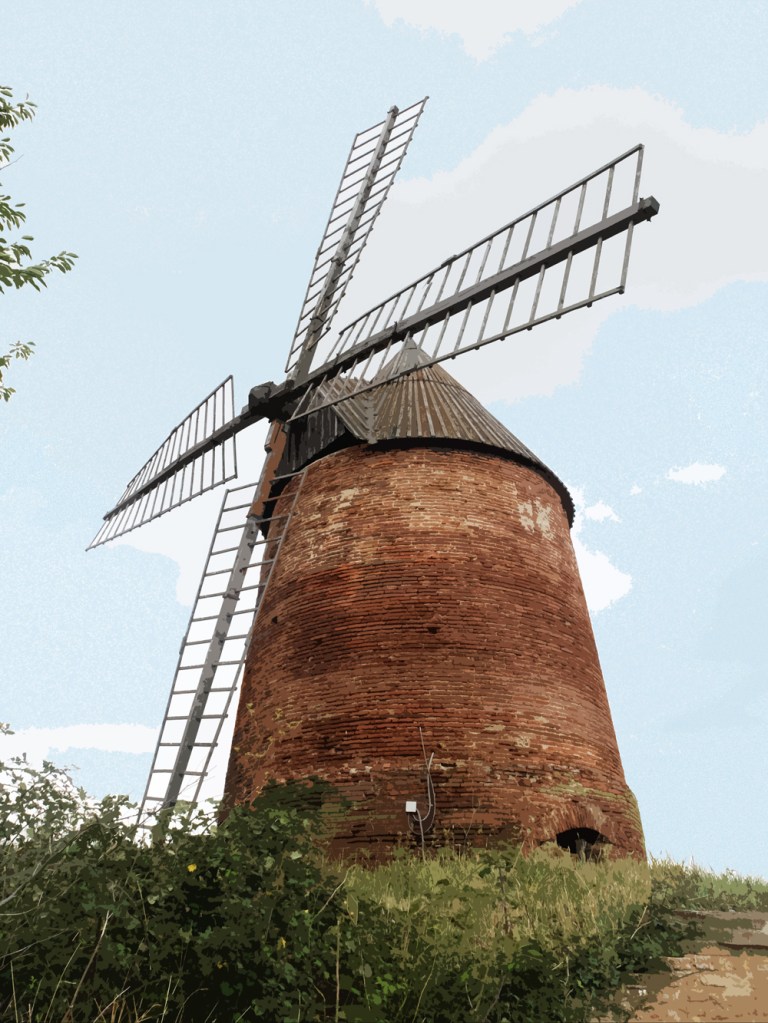
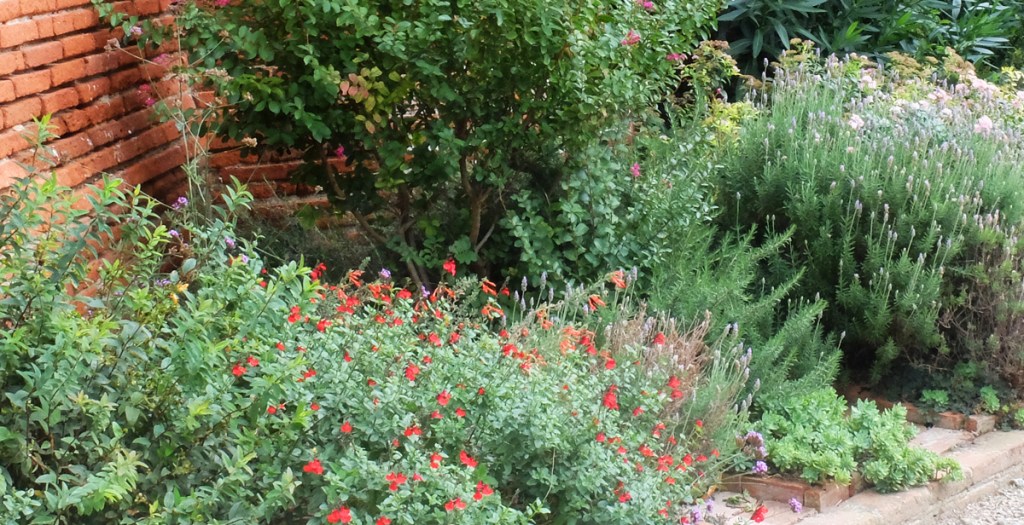
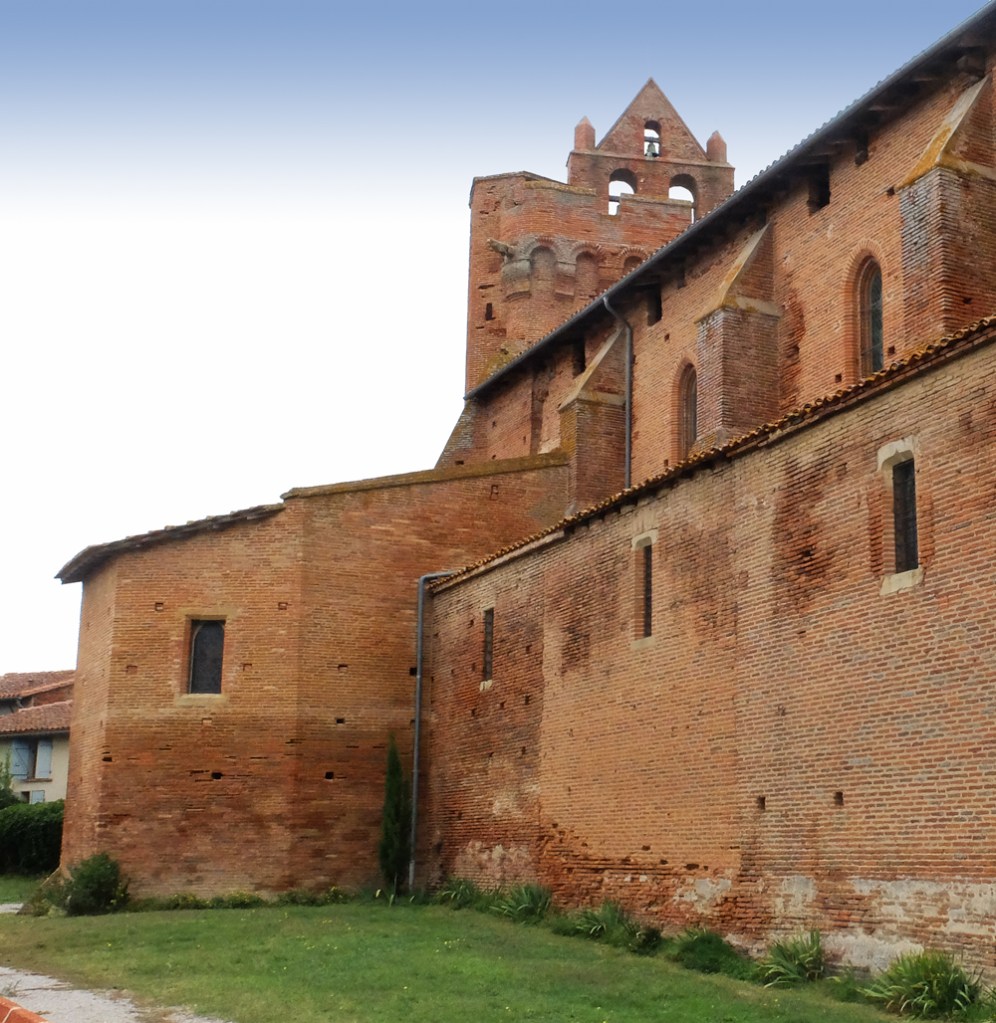
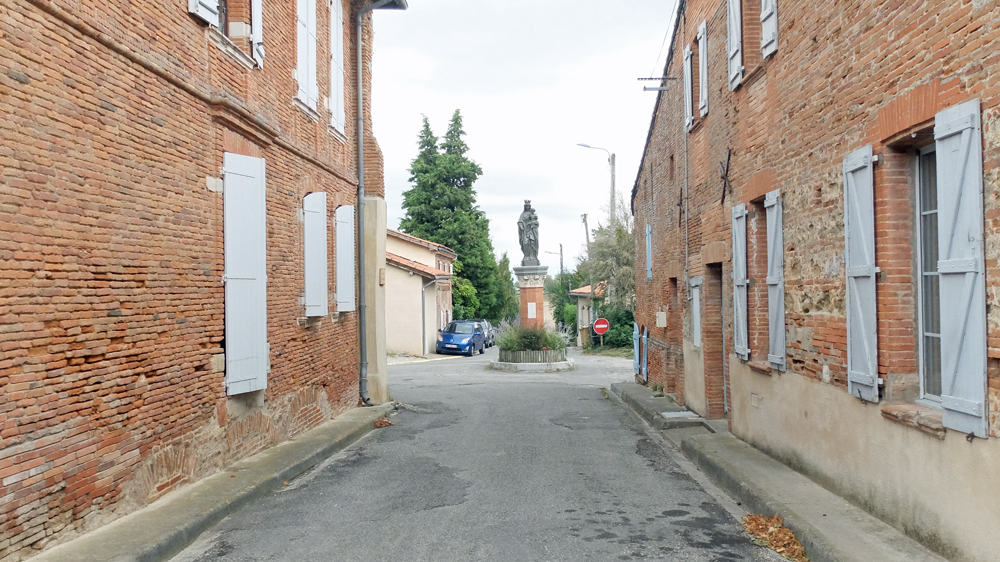
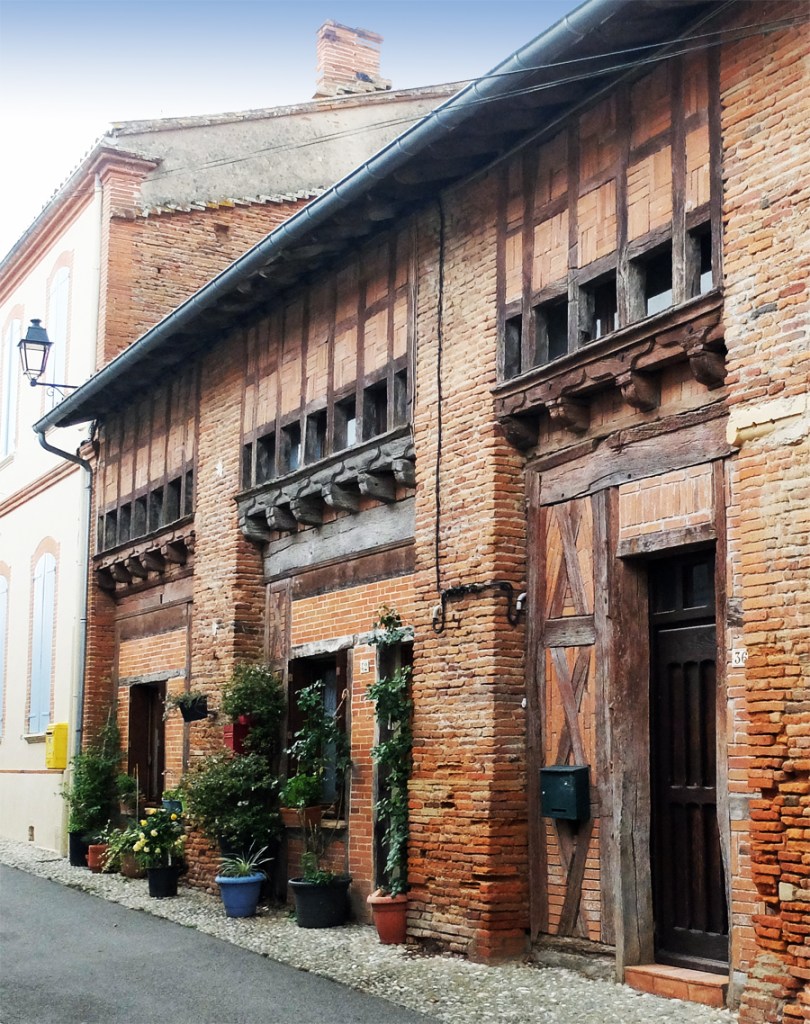
We walked around the Lac de la Thesauque, including a detour up to a bizarre hill village called Montguerd. Not easy to convey the weirdness of the place in photos, but worth a visit if you’re in the area.



23Sept2019:
A leisurely departure from the site after topping up water, showering, shaving (only me), etc., we retraced our steps via Villefranch, where we did a big shop at the Hyper-U, including finding a new lead for Lucy. She (OK, I) had lost her lead at the lake near Martigues, since when we had used her spare, which she has learnt she can escape from by shaking her head in a certain way. Impressive, but potentially dangerous.
We drove into Toulouse, not far from the Spanish border. Like most of the cities and many of the towns in France we have, during over fifty years of driving around the country, been here before, but the memory needs jogging from time to time. I mainly wanted to visit because, as stated earlier, we were following the course of the Canal du Midi, which ends in Toulouse, which I hadn’t previously realised (I had thought it extended further north-west). The Canal joins the Garonne river, which bisects the city. The city is also known as the “Rose Red” city because of the use in the area of flat red bricks. (Actually, isn’t Petra in Jordan the “Rose Red City”?) We were also interested to spot the Santiago pilgrimage symbol (see the last picture below) which we had, mainly unintentionally, followed from time to time in Spain and Portugal this time last year. Toulouse also has strong connections with Bristol through the Airbus collaborations.
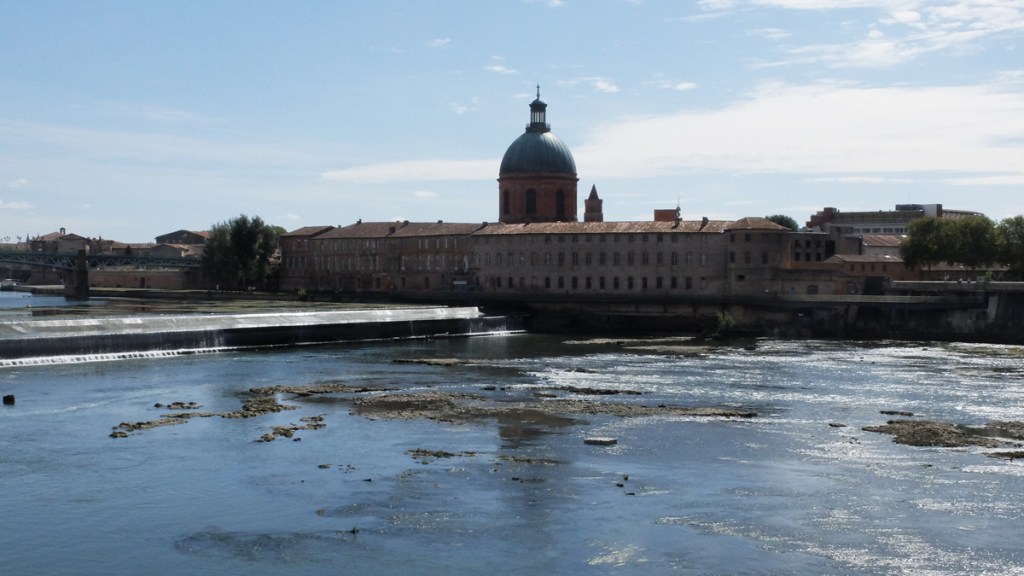


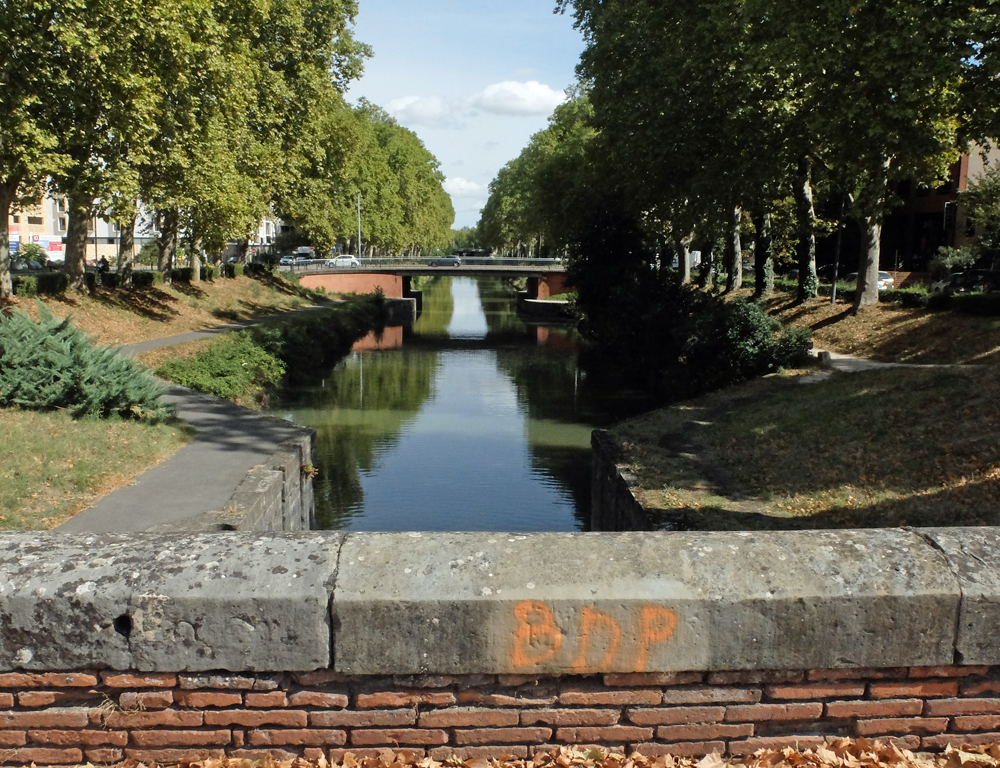

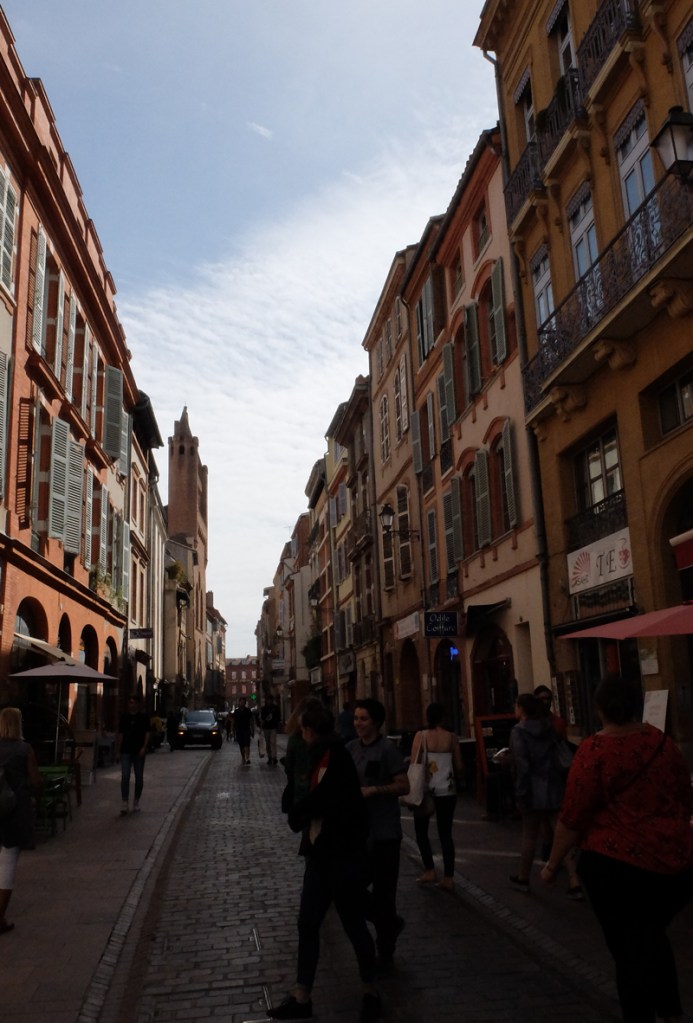


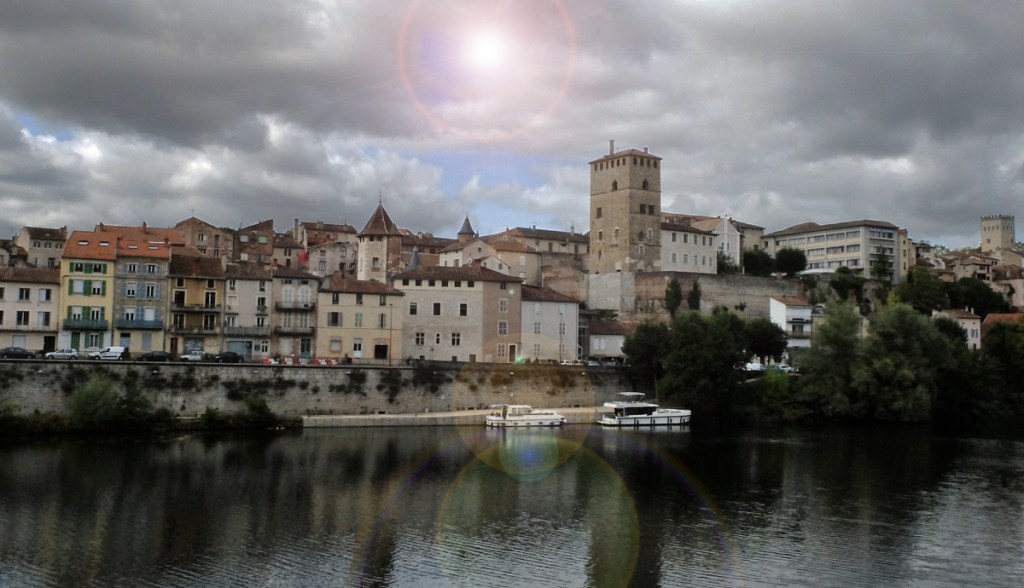
Later in the day we drove north through some spectacular mountain scenery to Cahors, which is situated on a loop in the river Lot, and to which, I’m pretty sure this time, I have never been before. As it was late, we drove straight to a camp site by the side of the river. I think we would have to award this family-run site our award for best site, not just the immaculate facilities but the friendly and helpful owners. We planned to get Lucy’s passport updated here (health check and tapeworm tablet) and needed to contact a vet. The site staff offered to contact a vet and translate for us, if necessary, and make other arrangements. As it happened we didn’t need help, but the offer was nice. We were situated next to an elderly German man who mildly berated me for “Brexit”. This puts me in a difficult spot because although I think brexit is a disaster I still feel some loyalty to my fellow Brits, not that 52% of them deserve it. I tend to fall back on “oh, well…s” and shrugs, and try to turn the conversation to campervans.
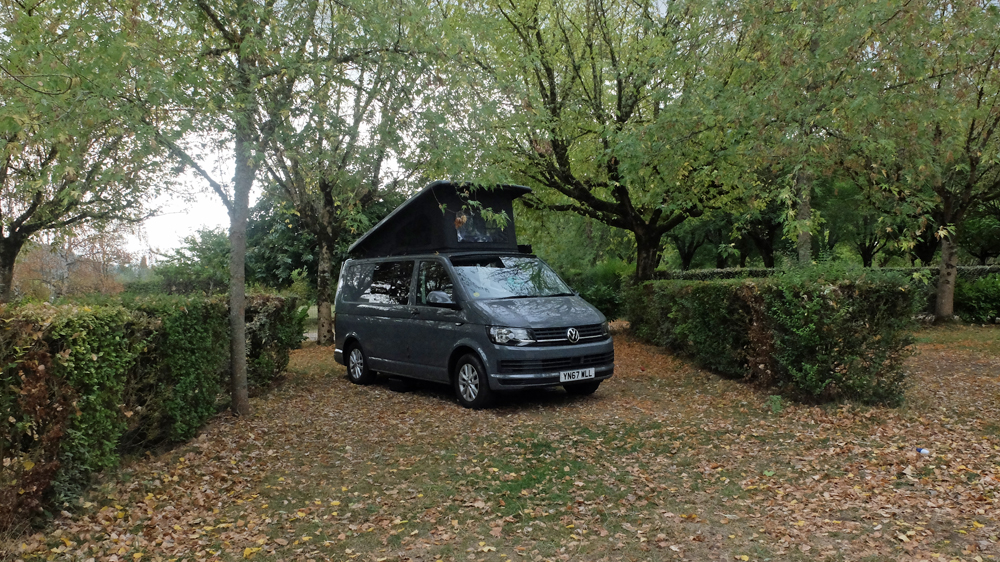
24Sept2019:
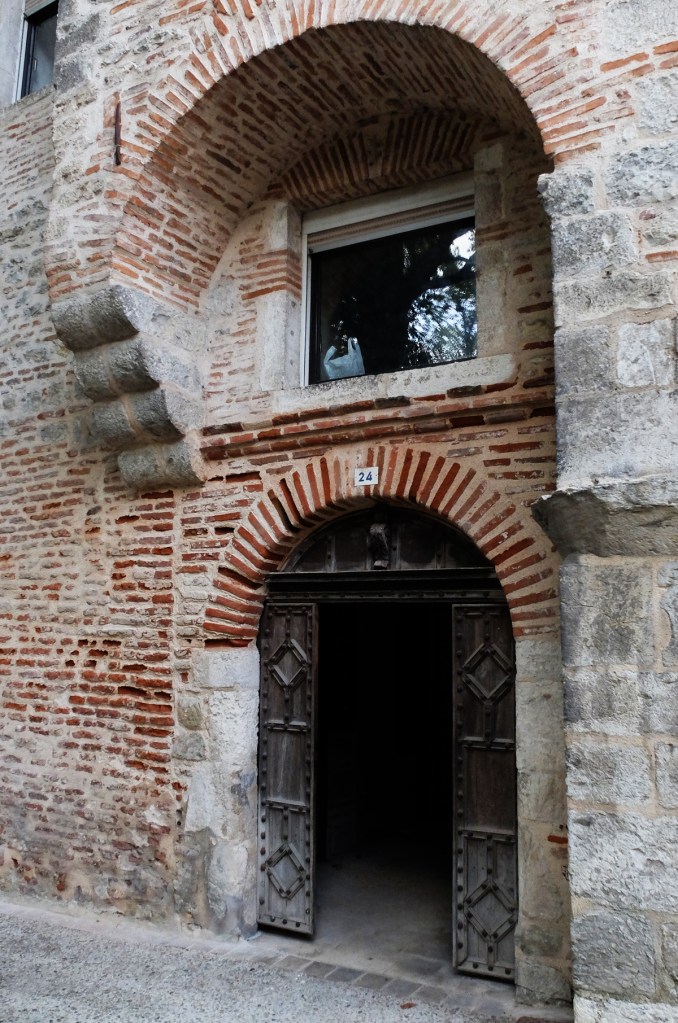
Cahors is a find, and worth another visit sometime. We walked south along the river, on the “outside” of the loop, east of the city centre. On the recommendation of our campsite hosts we climbed up a steep, rocky, hill to the Mont Staint Cyr viewpoint and ate lunch overlooking the city. It’s possible to drive up, but where’s the fun in that? Afterwards we walked around the historic centre.

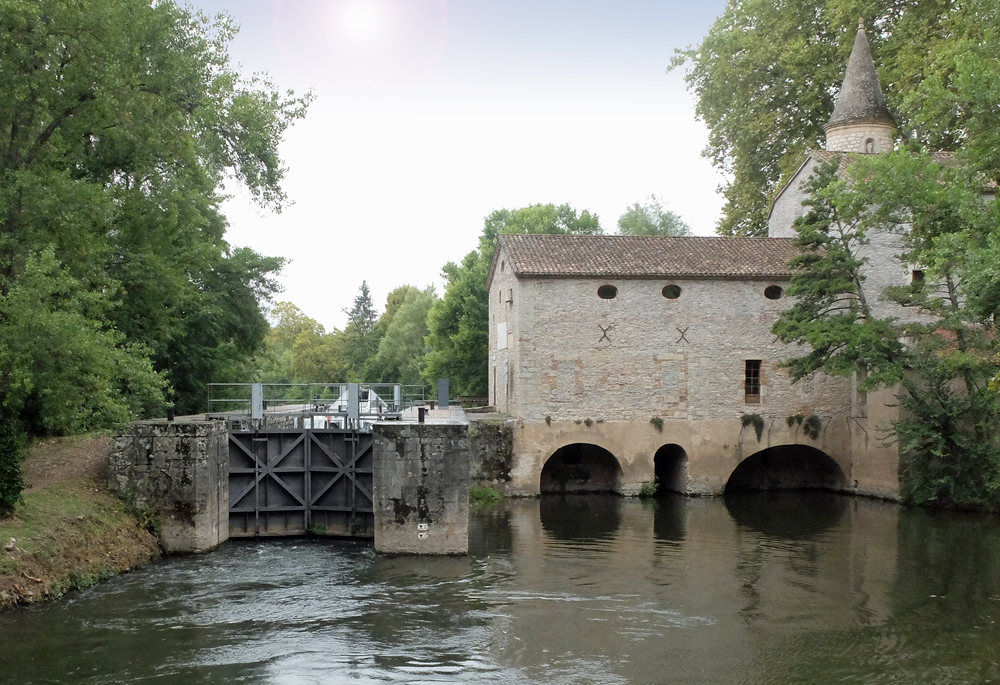


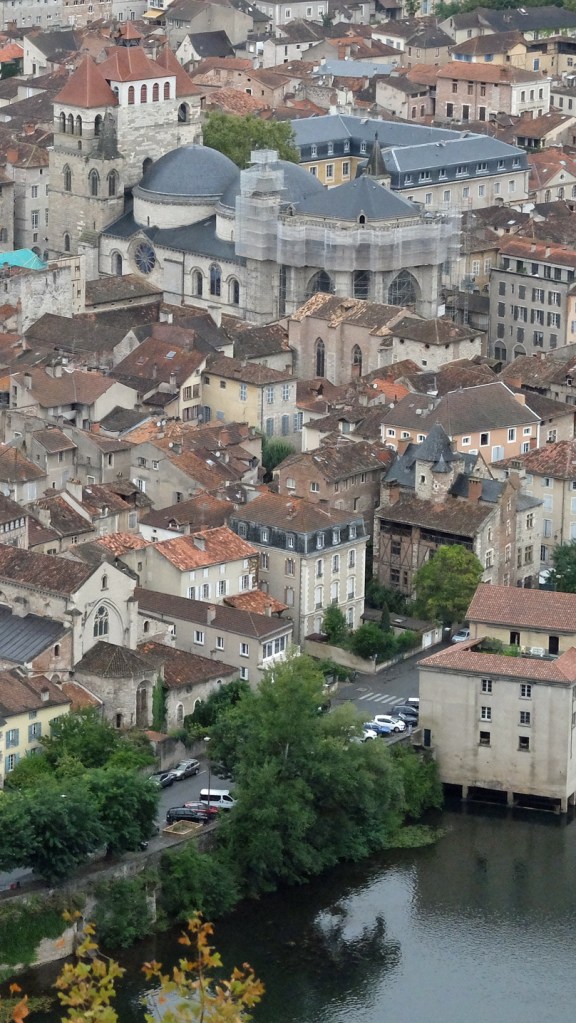


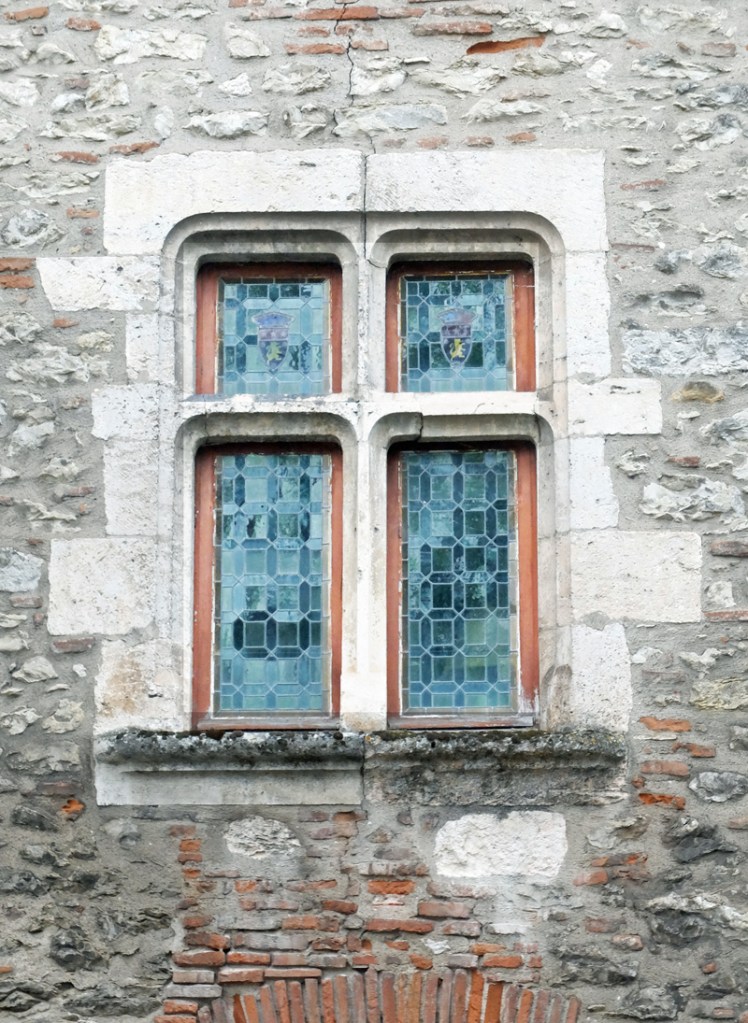
25Sept2019:
Still in Cahors we walked in to the twice-weekly market and bought lunch and some cheeses for Miles which we had to eat in the following few days as they were never going to survive the journey home. Then to the western side of the city and the “oldest fortified bridge in Europe”, and back through the northern part of the historic quarter.
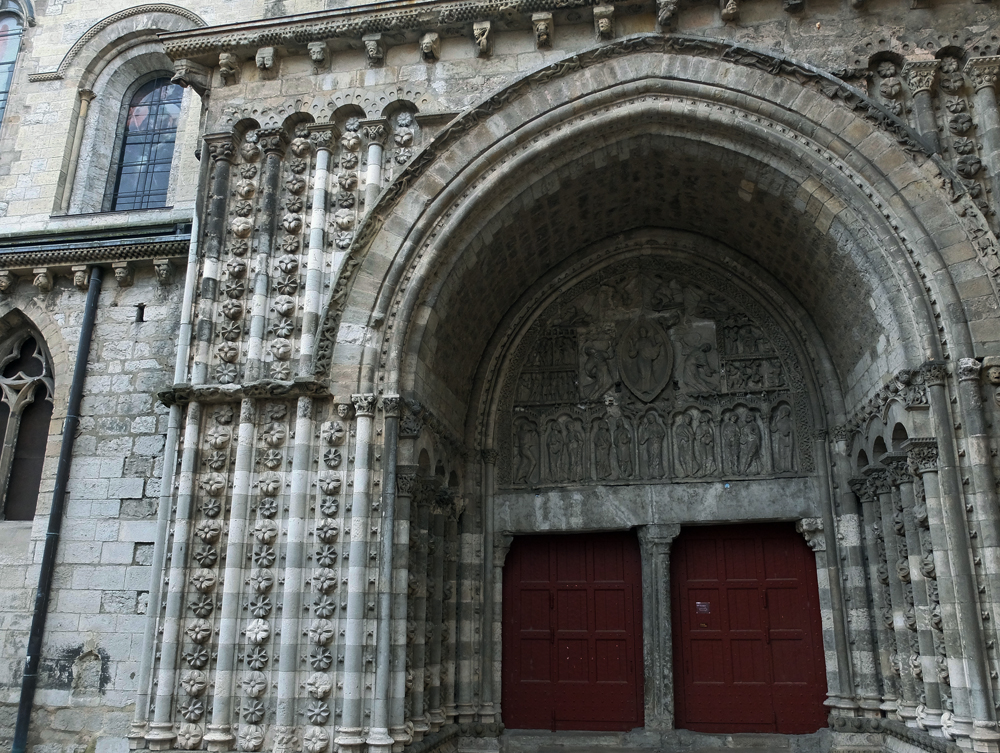
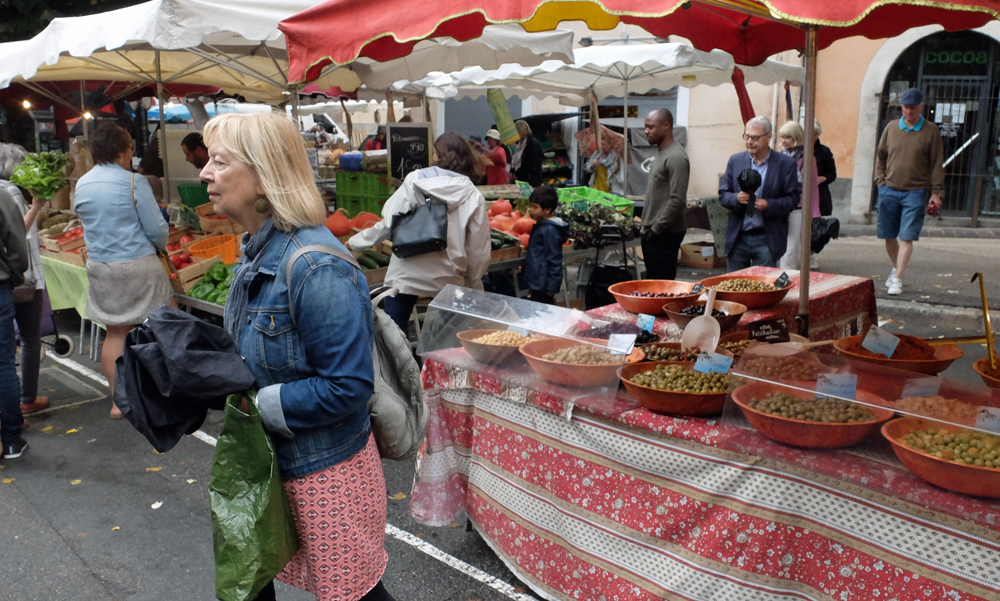

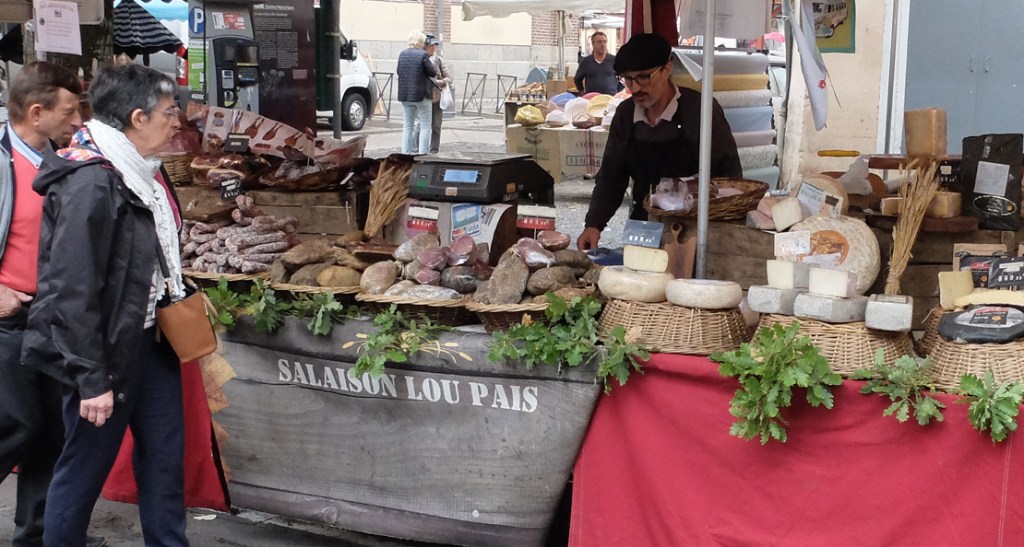

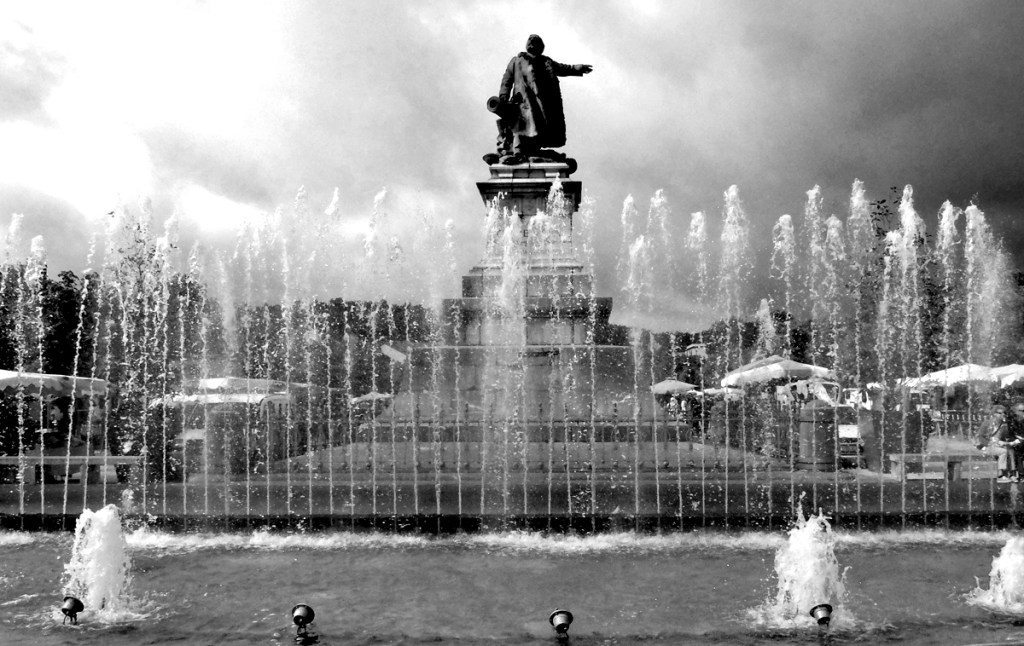
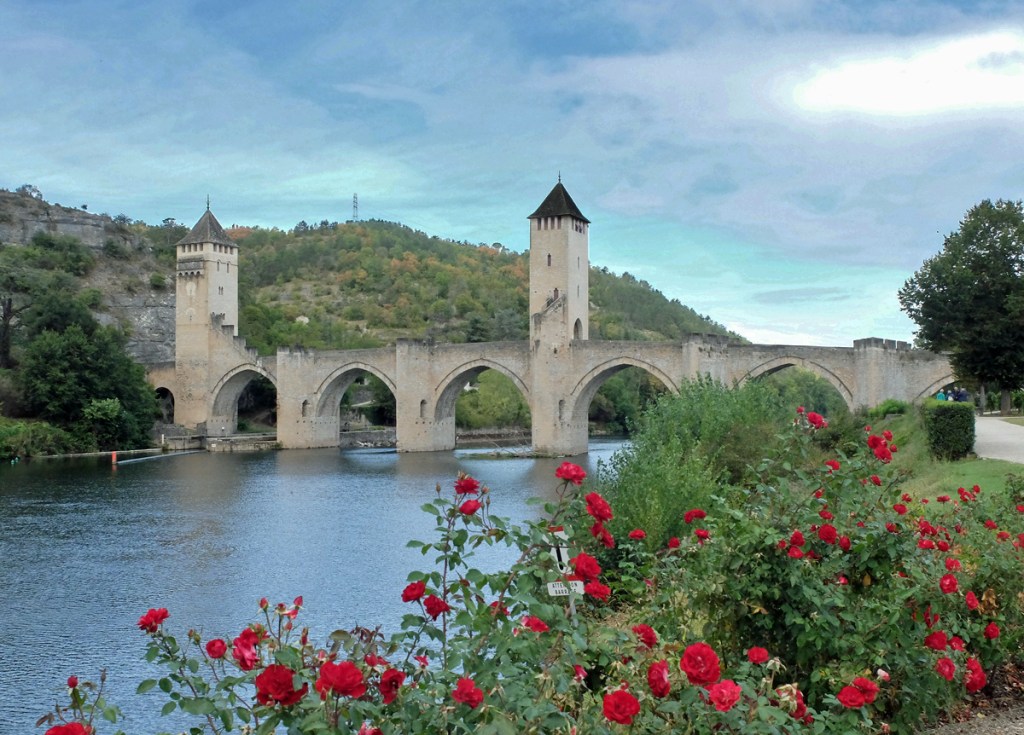
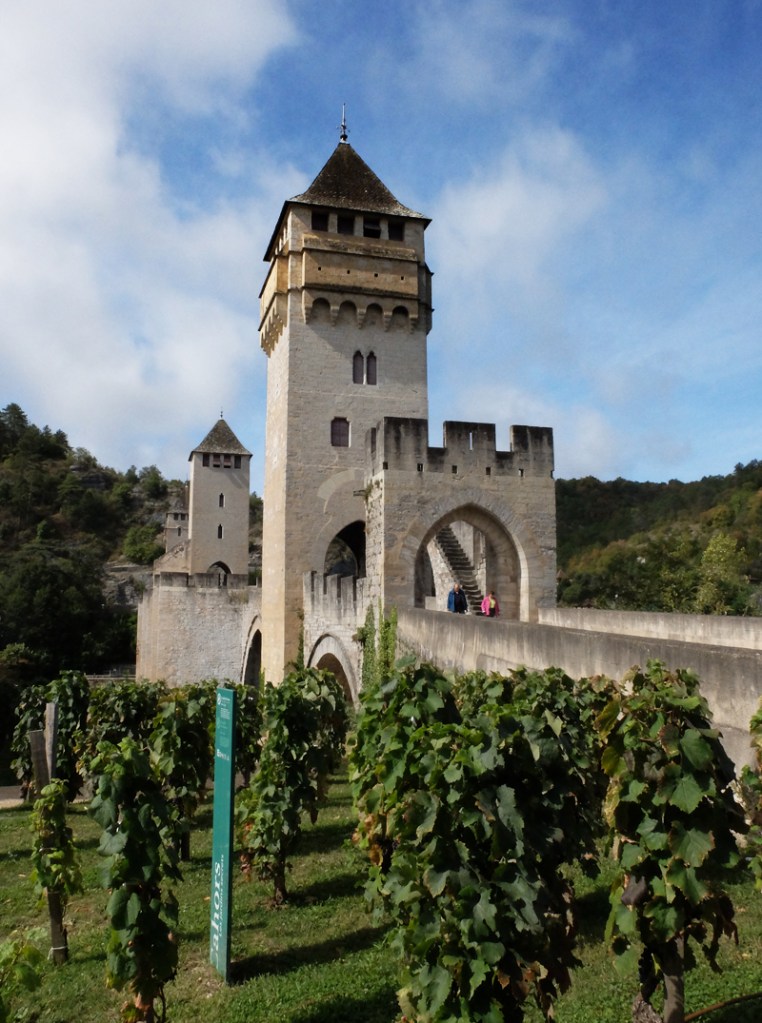
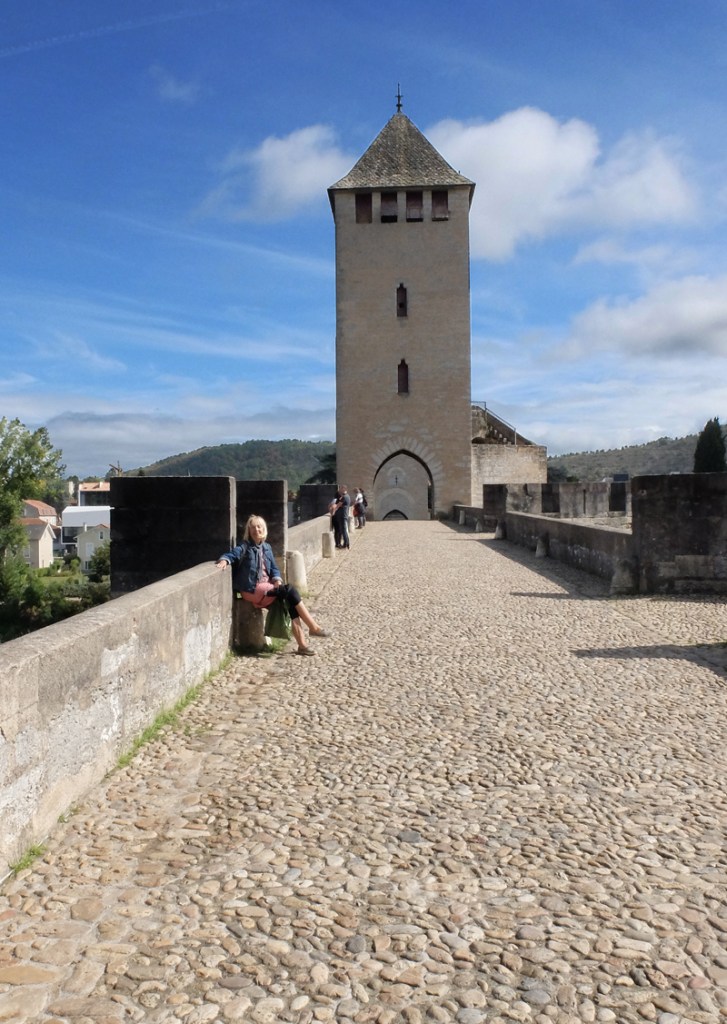

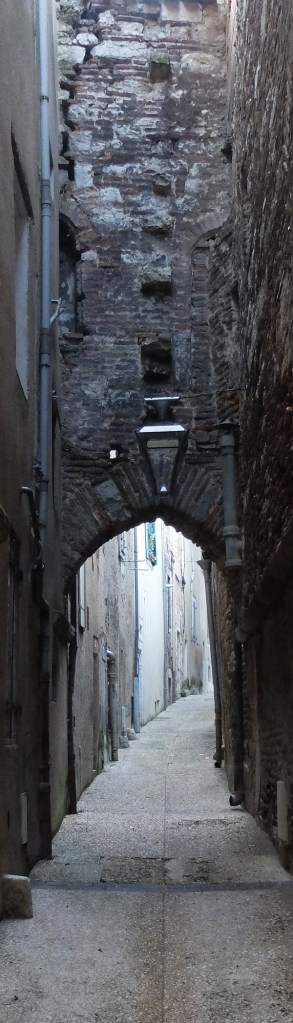

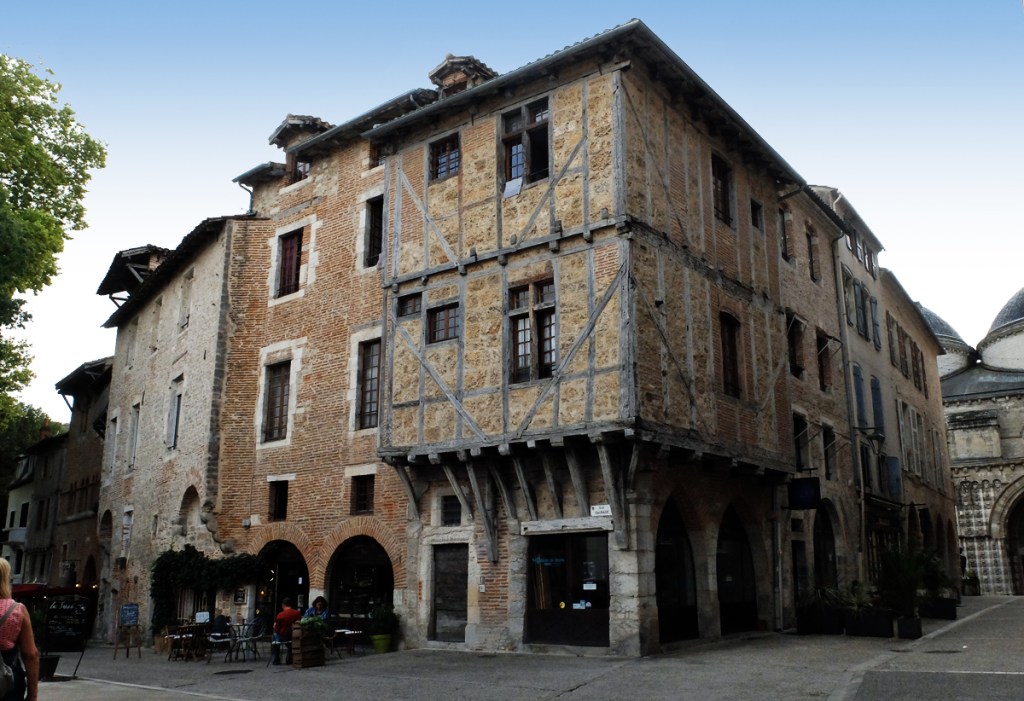
At 5:00pm I took Lucy to the vet for her pre-arranged appointment for a general examination and the administration of anti-tapeworm medication so that her passport could be stamped for our return to the UK. This is nerve-racking for all concerned, particularly me. Lucy is not a dog who takes to strangers easily and being lifted onto a table and “messed about with by a Frenchman” is viewed with extreme suspicion. I had explained yesterday to the receptionist, when I popped into the surgery to make the appointment, that shoving a tablet down her throat wouldn’t be a good idea if the surgeon valued his fingers so we had agreed that I would bring in some food in which to secrete the pill. Sal made a far too big parcel of meat and cheese which I’d brought in my backpack, and now handed to the very kindly middle-aged veterinarian who unwrapped it and rather sadly said that he’d had to miss lunch. I said that there was easily enough for him and Lucy, if he didn’t mind sharing. I think he was tempted but his professional training kicked in at the last minute and Lucy had the lot. On the plus side for the vet, he did get to keep his fingers. Afterwards, we lightened the mood by saying “Brexit” to each other, and shrugging.
26Sept2019:
Well and truly on the way home now. We drove the three hundred kilometres or so north to Châteauroux, where we had stopped on the way home from Portugal this time last year. A convenient and pleasant town with a campsite, Camping Le Rochat Belle Isle, next to the river Indre and a lake, which we walked around in the evening. The campsite accueil has an impressive but unexplained collection of old brass musical instruments.

27Sept2019:
Last long day of driving from Châteauroux – very wet from overnight rain – to Long on the Somme near Abbeyville, where we stayed on our first night in France nearly a month ago. Lucy and I re-acquainted ourselves with the area. Only one boat in the marina now but just as many noisy ducks. Still quite warm.
28Sept2019:
Drove the 120 kilometres up to Dunkerque and the now traditional visit to the Auchan supermarket to stock up with booze and food, before catching the (delayed) ferry to Dover. Home about midnight. 2,234 miles, door to door.
We spent a day wandering around Ellesmere and its nearby lakes (meres). I had assumed that a canal connects the town to the more famous Ellesmere Port, in Cheshire on the Mersey (a bit like Bruge and Zeebrugge in Belgium), but I am wrong. Apparently there was an Ellesmere canal which started from the Mersea but was never completed and never came anywhere near Shropshire.

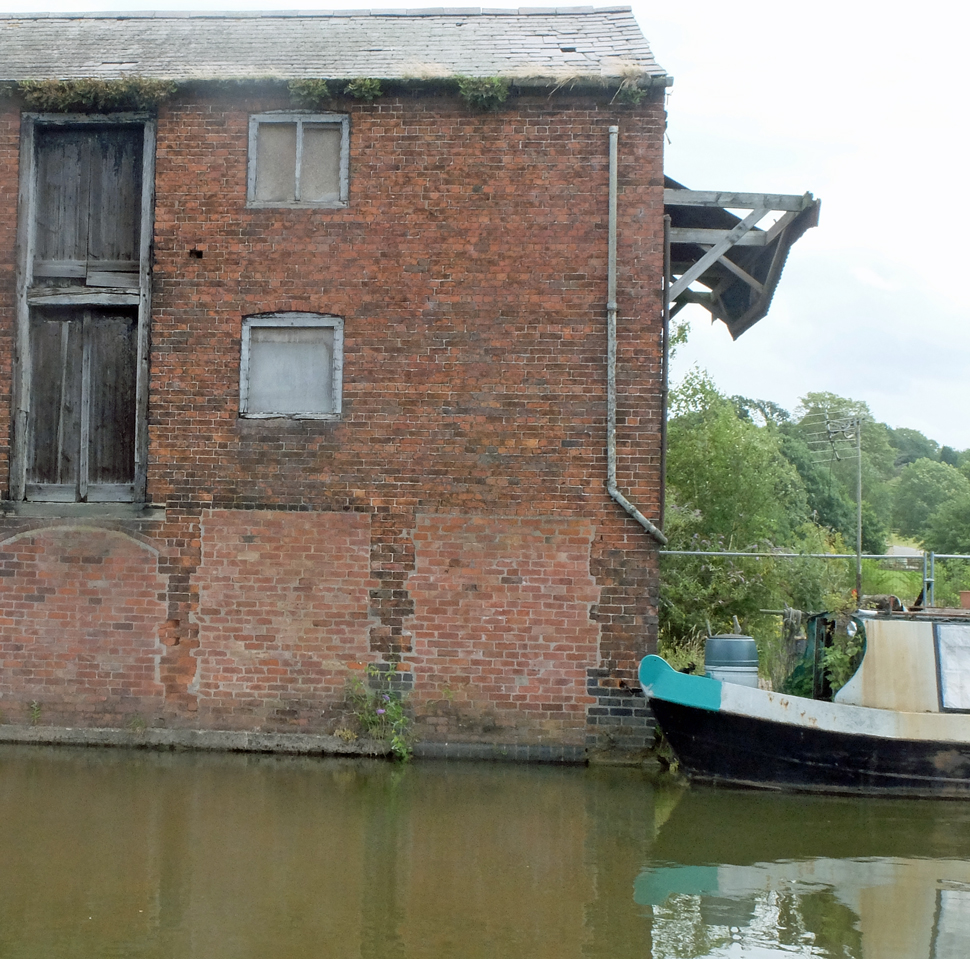


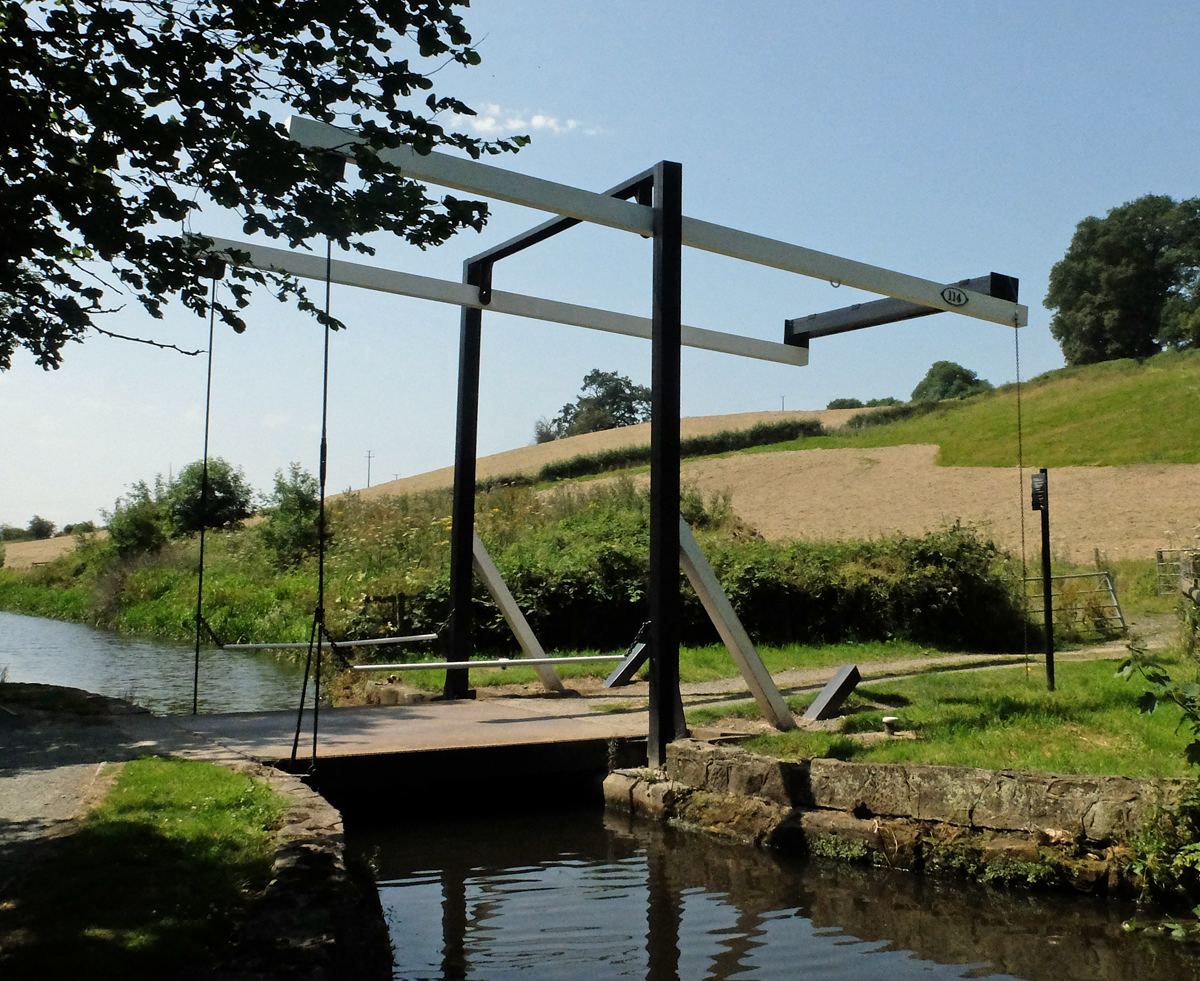
This is a transitional stage between the hills and almost flat throughout. The Trail follows stretches of the Montgomeryshire Canal and the River Severn before reaching the town of Llanymynech where the Wales – England border is the main street!
The main landmark viewed over the River Severn from the Trail is that of the Breidden Hills, with Rodney’s Pillar on its summit. The monument was built by the gentlemen of Montgomeryshire who supplied the oak wood from the area and shipped them down the River Severn to Bristol where Admiral Rodney’s naval fleet was built. Parts of this section are prone to flooding during very wet periods so checking for Environment Agency flood warnings is advisable.
The Trail joins the Montgomery Canal for a number of stretches. The canal was originally used to transport lime to improve the farmland of the Severn Valley. [© http://www.nationaltrail.co.uk/ ]
Due to bus availability/logistics we had to start this bit from Welshpool and slightly by-pass Buttington Bridge (where we ended up last time). Welshpool seems nice and we walked along the Montgomery canal for a while. Also, we didn’t quite get to Llanymynech this time, as we were camped by some fishing lakes at Three Crosses where we were met by Wendy and Graham and, later, Emma and Darren and their three dogs.

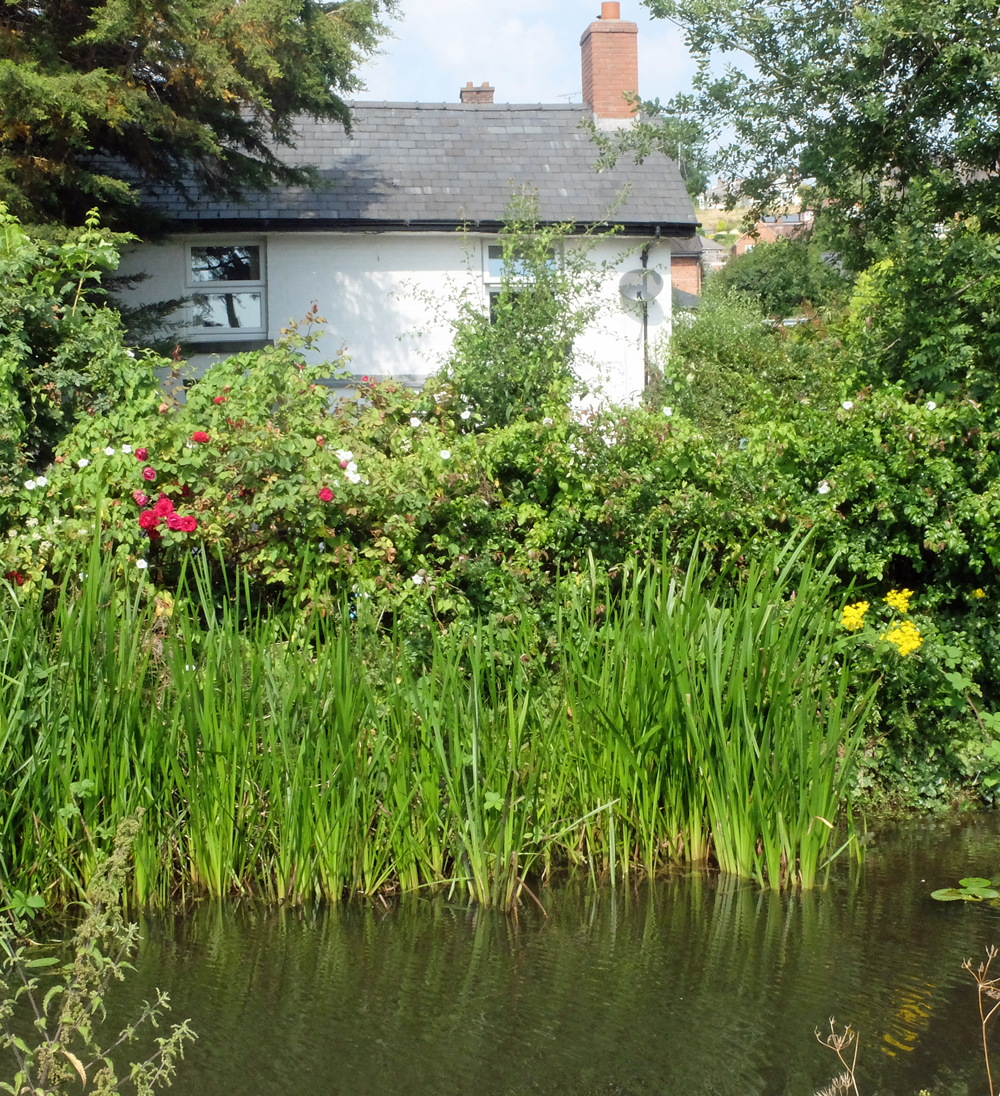




There is ample opportunity to see the Dyke itself as it is followed across fairly flat but very pleasant terrain for most of this section. The Dyke and Trail here are also still on the true national boundary – as you cross to and fro over the border there are a number of occasions where you can have one foot in England and one in Wales.
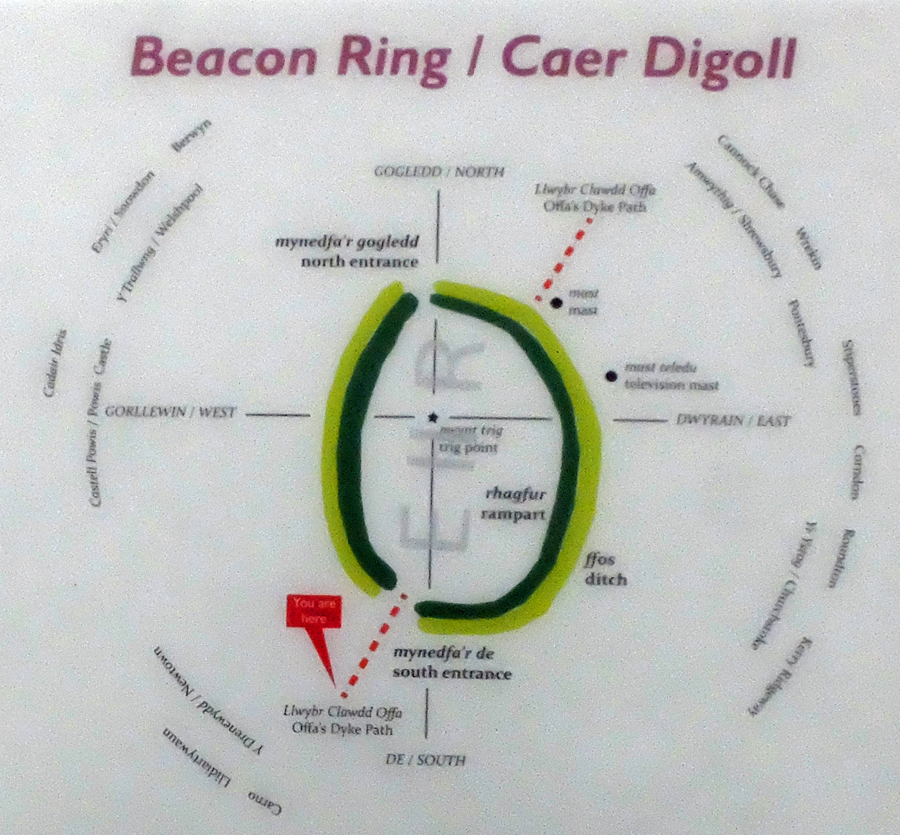
Towards the end of the section the route climbs up to the earthworks of Beacon Hill fort, the site now owned by Clywd Powys Archaeological Trust. A picnic table has been installed by the Trust on the southern boundary which gives fabulous views to the east, south and west. The section finishes on a descent to Buttington Bridge where you meet the River Severn. [© http://www.nationaltrail.co.uk/ ]
The first part of this stretch has Montgomery and then Welshpool to the west. The Beacon Hill fort, mentioned above, had several active archeological digs.

A grey heron hitching a ride on the Kennet and Avon canal near Bradford-on-Avon.



You must be logged in to post a comment.