

Stained glass panel in Bath recycling centre.

Psychedelic citroen.
Stained glass panel in Bath recycling centre.
Psychedelic citroen.
When I was a teenager I had a book about photographic techniques in which Honfleur was used extensively to demonstrate f-numbers, shutter speeds, ASA settings and similar wizardry. I thought then that nowhere could be that perfect, and have been several times since to reassure myself that, in fact, it is. The town is built around an old harbour on the south of the wide Seine estuary, opposite Le Havre. Its chief industries are fishing and tourism, which come together in the many sea-food restaurants.
Visiting in March has some advantages: hotels are cheaper, it’s less crowded. But we did need warm coats and it was not as photogenic as in Summer, in fact there was still some snow on the ground. However, we did have some great fruits de mer in the restaurants around the harbour and managed to stock up with cheap booze for the next few months.
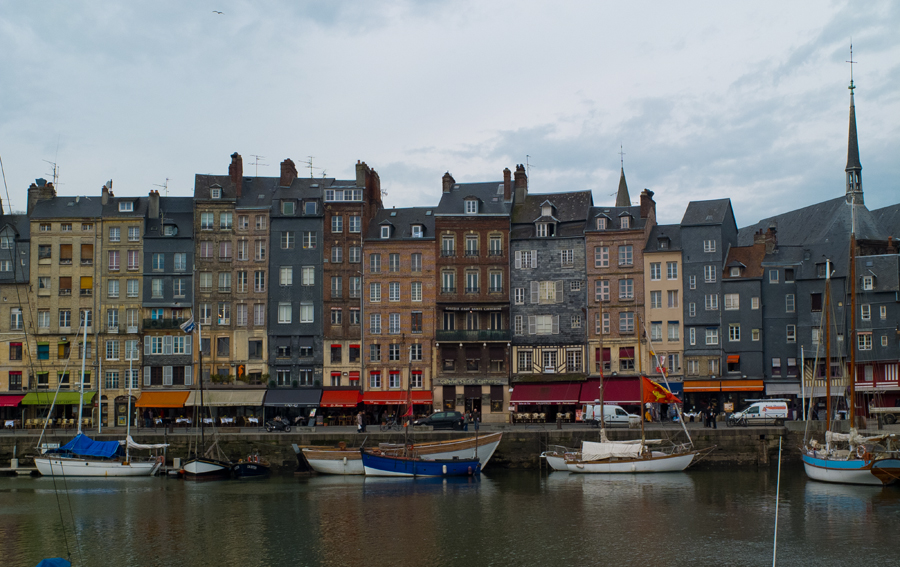
Honfleur Harbour.

Rouen cathedral

Rouen cathedral

Honfleur roofs, from hotel room.

Mistletoe near Seine estuary.

Seine-side ruin

Cockle pickers statue, Honfleur.

Honfleur outer harbour
Off to Normandy for a few days, via Portsmouth to Le Havre, so, on the way, we’re calling in to see a childhood friend of S’s who lives in Chandler’s Ford in Hampshire. We thought we’d make a diversion through the New Forest and stopped, briefly, in Lymington.
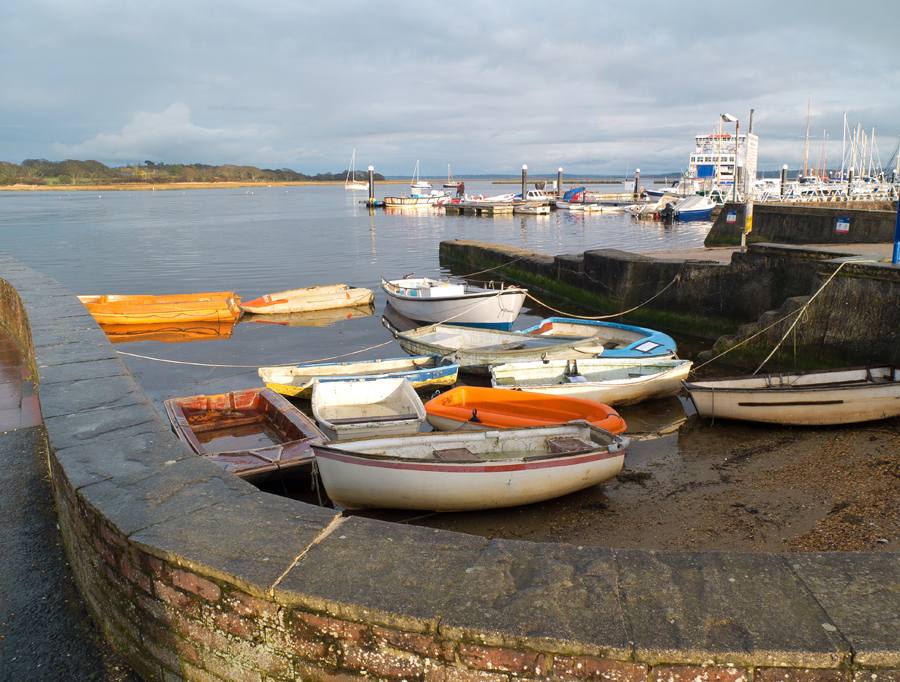
Lymington, Hampshire.
Cheltenham for a wander around the Leckhampton Road and Montpellier districts. Antique (i.e. expensive junk) and second-hand charity (i.e. cheap junk) shops, mostly. Also, lots of organic food shops. Lots in common with Bath – a bit “up itself”, but always nice for a visit. We decided that we could live there, at a push.

Cheltenham College crocuses.
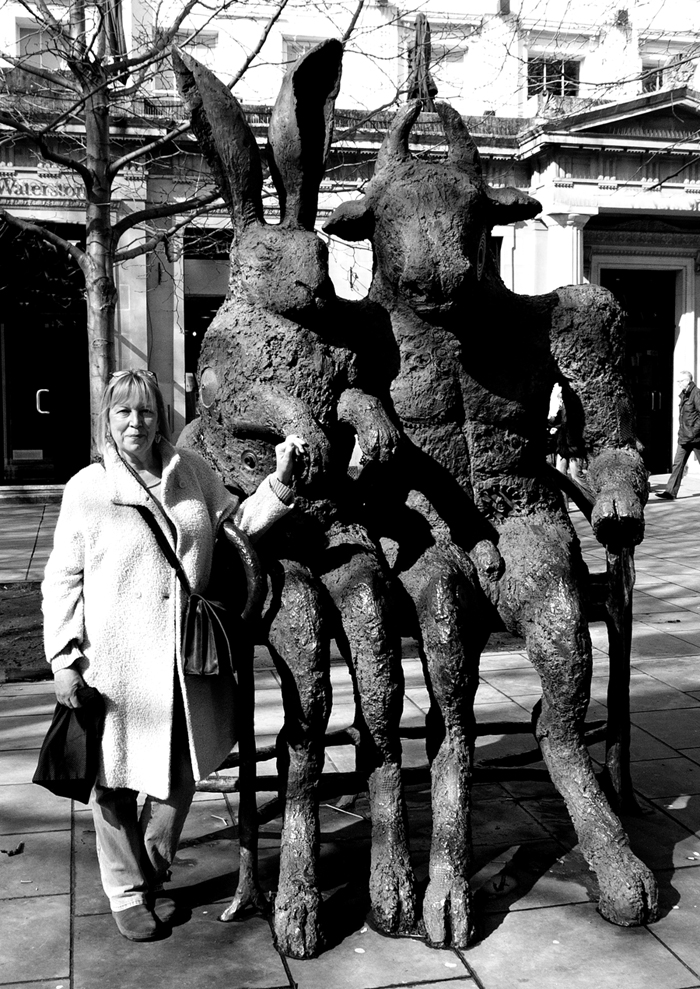
Some local characters.
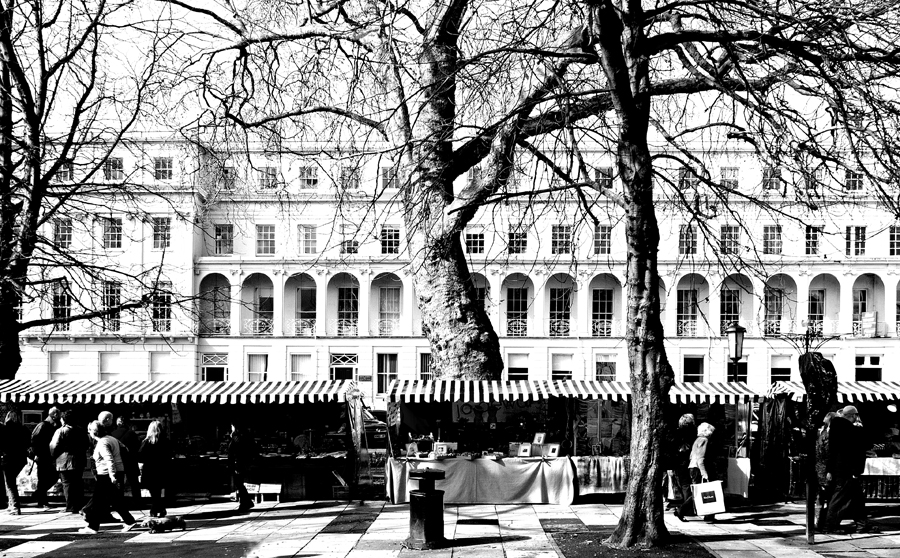
Cheltenham street market.
Spotted a small plaque (below) about Brian Jones which I hadn’t seen before.

Re Brian Jones.

Container ship leaving the Severn Estuary.
Portishead has a number of items of public art. One day I will try to photograph them all for a page here. However, for now, here’s a picture of the above-mentioned “block of flats” behind Jon Buck’s four-metre-high “Ship to Shore”.

Ship to Shore, by Jon Buck.
In the late-1970s I worked for a heavy engineering company called Stothert and Pitt, in Bath. I worked on computer systems which controlled such things as stock and production control, Bill of Materials Processing (BoMP) and Production Evaluation and Revue Techniques (PERT) networks. Exciting stuff, eh?
The real stars of the company were the men (they were all men, of course) who actually built the cranes and other massive pieces of equipment which were then exported all around the world. Many of these men joined the company at 15 and stayed until they retired at 65 (gaining a much-coveted “Mayor’s Medal” for 50 years’ service with one company). To the relief of the pension providers of the day, they then died of boredom two or three years later.
The company became a classic casualty of the 1980s, after I left. Along with many other proud, Victorian companies, seduced by the idea that a cumbersome management structure of accountants and, yes, IT specialists was more important than design and product expertise (and after a brief asset-stripping session by none other than Robert Maxwell) they eventually went bust leaving tracts of the banks of the River Avon free for executive luxury housing development, complete with a range of attractive bars, restaurants and Tesco Metros (just like everywhere else).
I’m rambling on about this because today we walked around Bristol docks where stand several monuments to my old employers.
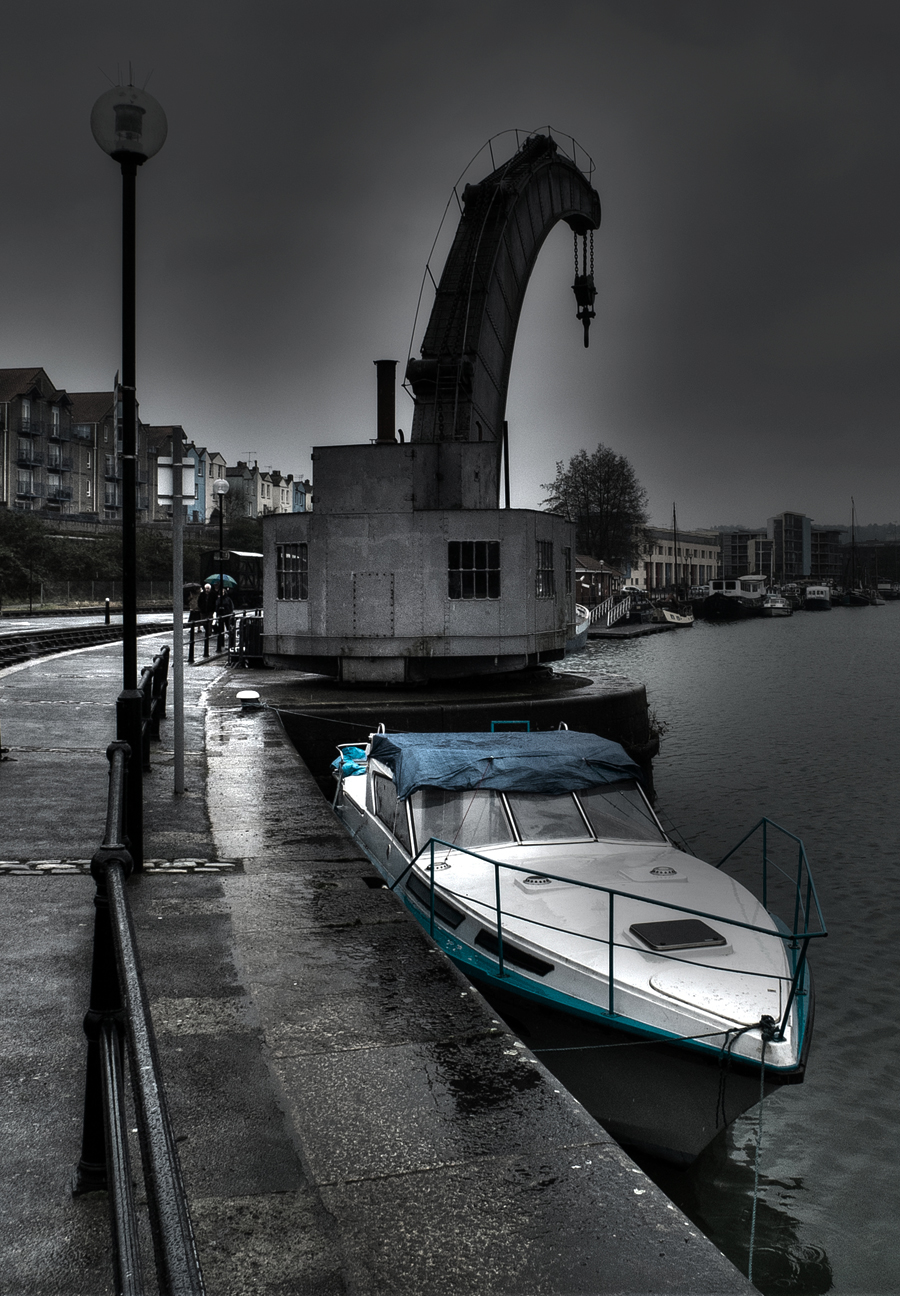
Stothert and Pitt crane in Bristol docks.

Part of Stothert and Pitt crane in Bristol docks.
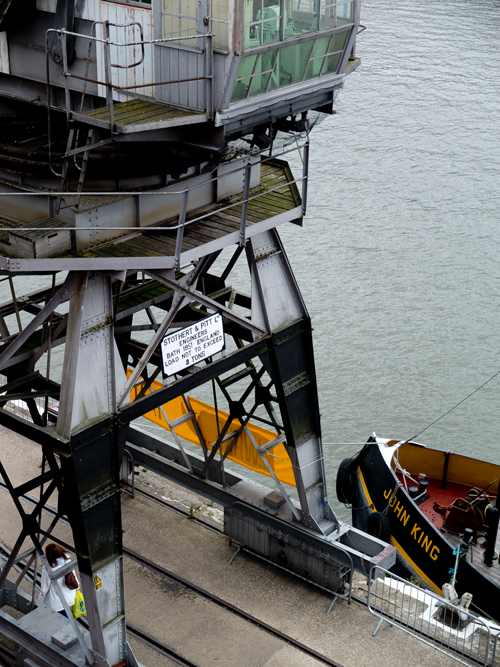
Stothert and Pitt crane in Bristol docks.
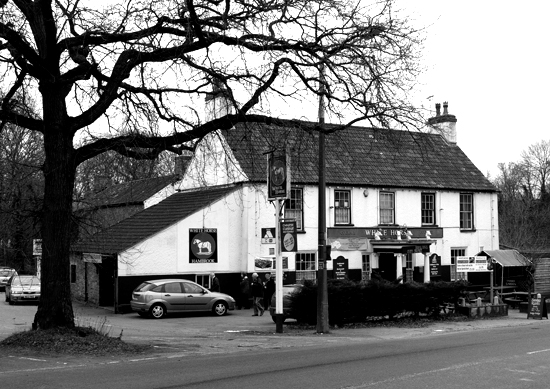
Pub With No Beer.
Today was a first, though: the particular pub from which we were running had no beer. Seems you have to phone up in advance, these days, if you want to be sure of anything as unusual as a pint of real ale.
The spare part for my “big” camera has arrived and Dave Cole in Uphill has fitted it. Brilliant. I was wondering whether I would become too fond of my new “small” camera, but, handy though it is for sticking in a (large-ish) pocket, it can’t compete with a beefy dSLR. What can?
Uphill, south of Weston-Super-Mare, is one of those quirky places which you either love or, well, don’t feel that strongly about. Probably a bit of an exaggeration to compare it to the Carmargue or the Isle de Ré, but a bit up-market from Severn Beach or Canvey Island. After collecting my camera body from Dave, S. and I had a walk along the beach and I, of course, took some photos (“small” camera as I didn’t have a lens for the big one). It wasn’t the same without Archie, obviously, but nice enough.

Uphill, Somerset.

Uphill, Somerset.
As a Christmas present, M made us a rustic garden bench for the allotment. Did I mention the allotment? A week or so ago we had prepared the soil sufficiently for S and me to lug it into place. It’s heavy. M and Gemma came over at the weekend and we took them down to inspect it, in situ. Here’s M about to put it to the test:
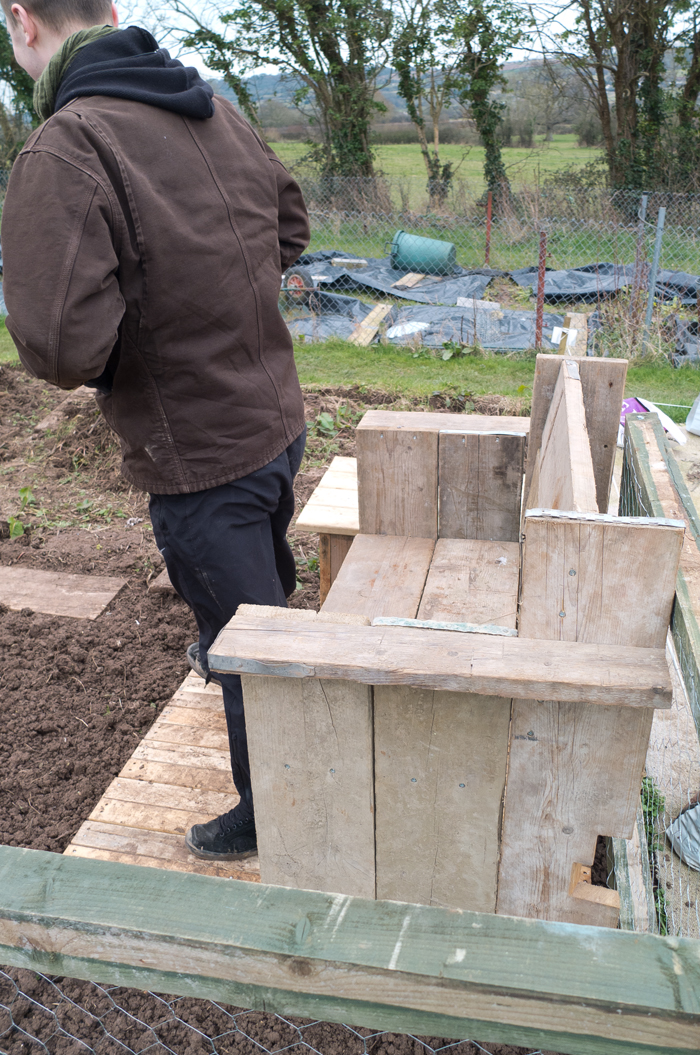
The bench.
Just before we went to London (see below), I dropped my digital SLR camera, complete with telephoto lens, onto the comparatively hard surface of our entrance hall. I’ve carried it, usually in one hand, around much of Europe and Morocco without incident, so it was a bit galling for it to fall out of an unzipped bag when I was least expecting it. I took it down to Dave Cole in Uphill near Weston, but he needs to get a spare part from, well, I dunno, somewhere. The pictures of London were taken with S’s Lumix point-and-shoot, and I must admit, in the cold weather, it was nice to keep it, with my hand, in a warm pocket.
I have several old film cameras, despite having sold the good ones on eBay some years ago. I don’t know why I keep them, I never use them. Film? So last century. But the old cameras do look, and feel, great.
When we got back from London I bought a Fuji Finepix X10. This is a fairly well-featured compact with, for me, the essential features of an optical viewfinder and RAW file format. London Camera Exchange in Bristol were doing one for a reasonable UK price, and were prepared to take my three-year-old “kit” lenses from my dSLR (long-since replaced by better Sigmas) in part-exchange.
I’ve been fiddling about with it for a few days. It looks quite “retro”, similar to a black Leica film rangefinder, or so I like to think. Here are some pictures I took with it today in Bath:
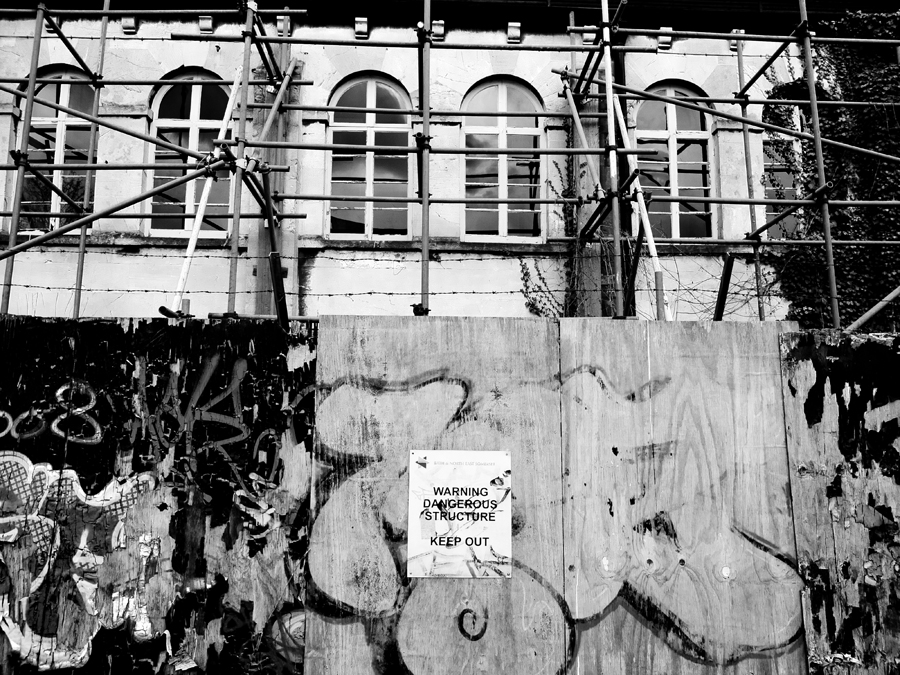
Disused reclamation yard, Bath. Waiting to be reclaimed.

Part of a decorated pig in the Bath Guildhall Market.
 Martin's Mag.
You must be logged in to post a comment.