
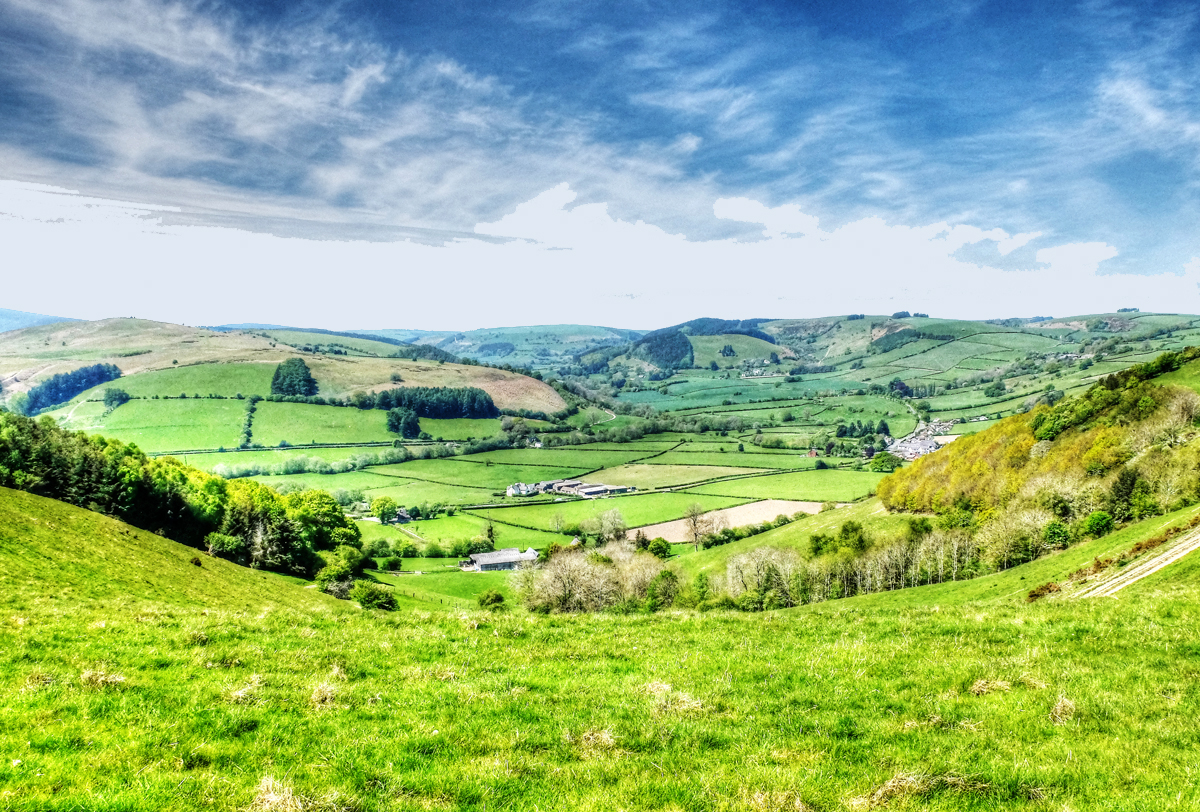
“As well as superb views from the remote hills this stage is notable for long stretches of well-preserved Dyke before the Trail enters its ‘spiritual home’ – Knighton (Tref-y-Clawdd, meaning the town on the dyke).
On leaving Kington the Trail passes over Brandor Hill and its golf course, the highest in England. Soon after, on Rushock Hill, the Trail meets up with Offa’s Dyke again, which it parted company with 56 miles ago after leaving Lower Redbrook in the Wye Valley. From this point to Chirk Castle the Trail and Offa’s Dyke keep each other company for most of the journey. The Trail soon passes over the border again from Herefordshire into Powys, the county with the longest section of the route.
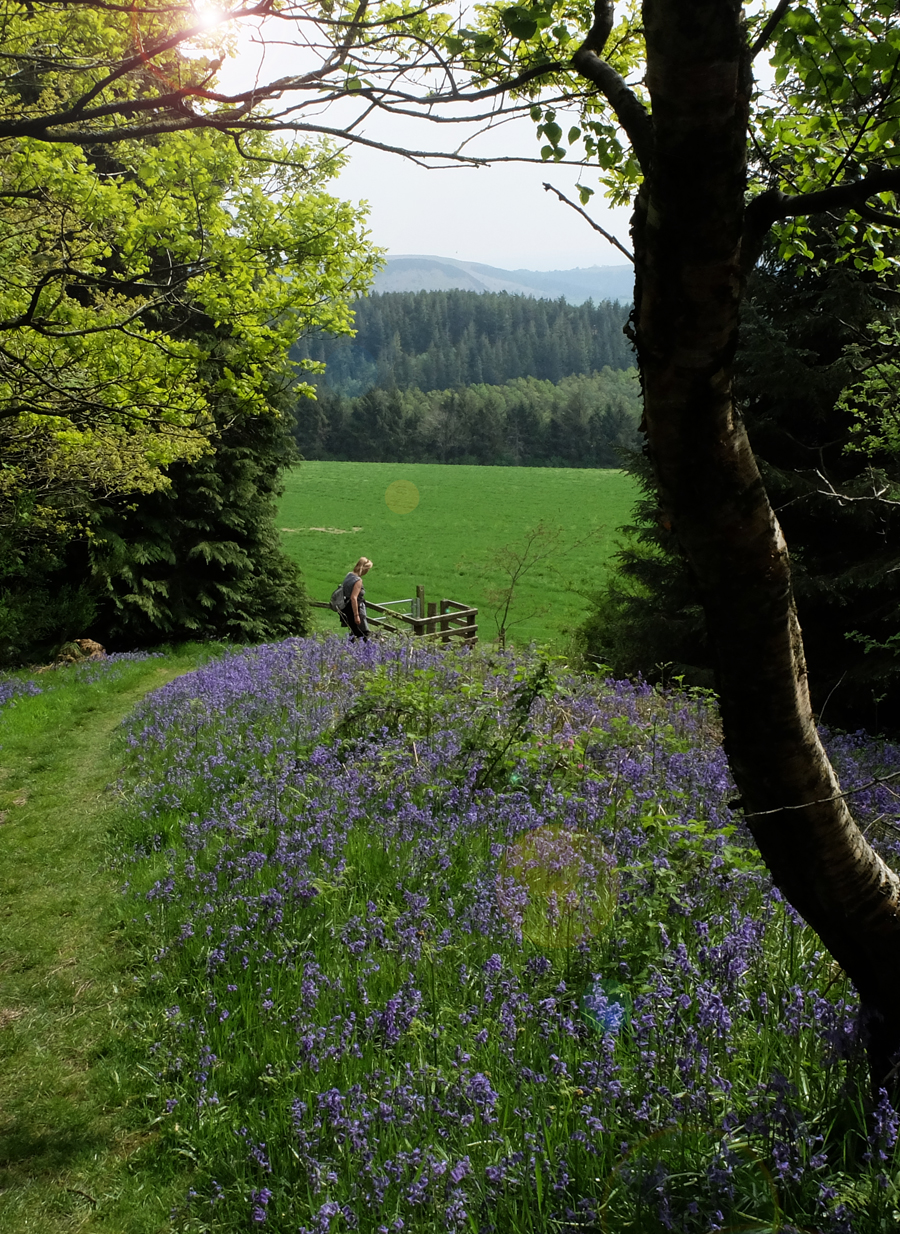
On route to Knighton the Trail passes through the Woodland Trust owned site of Granner Wood, which through careful management is being restored to broadleaf woodland. The Trail soon drops down to the River Lugg at Dolley Old Bridge with its many meanders. On the bridge watch dippers and a glimpse of kingfishers if you are lucky. The next climb brings you up to Furrow and Hawthorn Hill. From here there are stunning views westwards into Radnorshire. One of Owain Glyndwr’s famous battle sites can also be seen from here where he fought the English at the Battle of Pilleth, with the square clump of trees that mark the burial site of the soldiers. The final decent brings you down into Knighton and almost the half way point on your journey and the home of the Offa’s Dyke Centre.” [© www.nationaltrail.co.uk].
So far, this is the only section we’ve done “backwards”, that is, we caught a bus from Kington to Knighton and walked back.
 Martin's Mag.
You must be logged in to post a comment.